- The Rundown Tech
- Posts
- SpaceX flips the IPO script
SpaceX flips the IPO script
PLUS: New Meta Ray-Ban leaks


Jennifer Mossalgue, Rowan Cheung, Shubham Sharma & Zach Mink
March 27, 2026

Good morning, tech enthusiasts. Elon Musk may be gearing up for the strangest megadeal Wall Street has ever seen: a SpaceX IPO so massive it could put the usual rules of public markets under serious strain.
Behind the scenes, the plan reportedly pairs a sky-high valuation with an unusually large retail allocation, giving everyday traders — and more than a few Musk loyalists — a rare seat on the rocket.
In today’s tech rundown:
Musk wants to take SpaceX public — his way
Meta’s new Ray-Ban AI glasses leak via FCC
Defense startup Shield AI hits $12.7B
Meta pours $10B into Texas megadata center
Quick hits on other tech news
LATEST DEVELOPMENTS
SPACEX
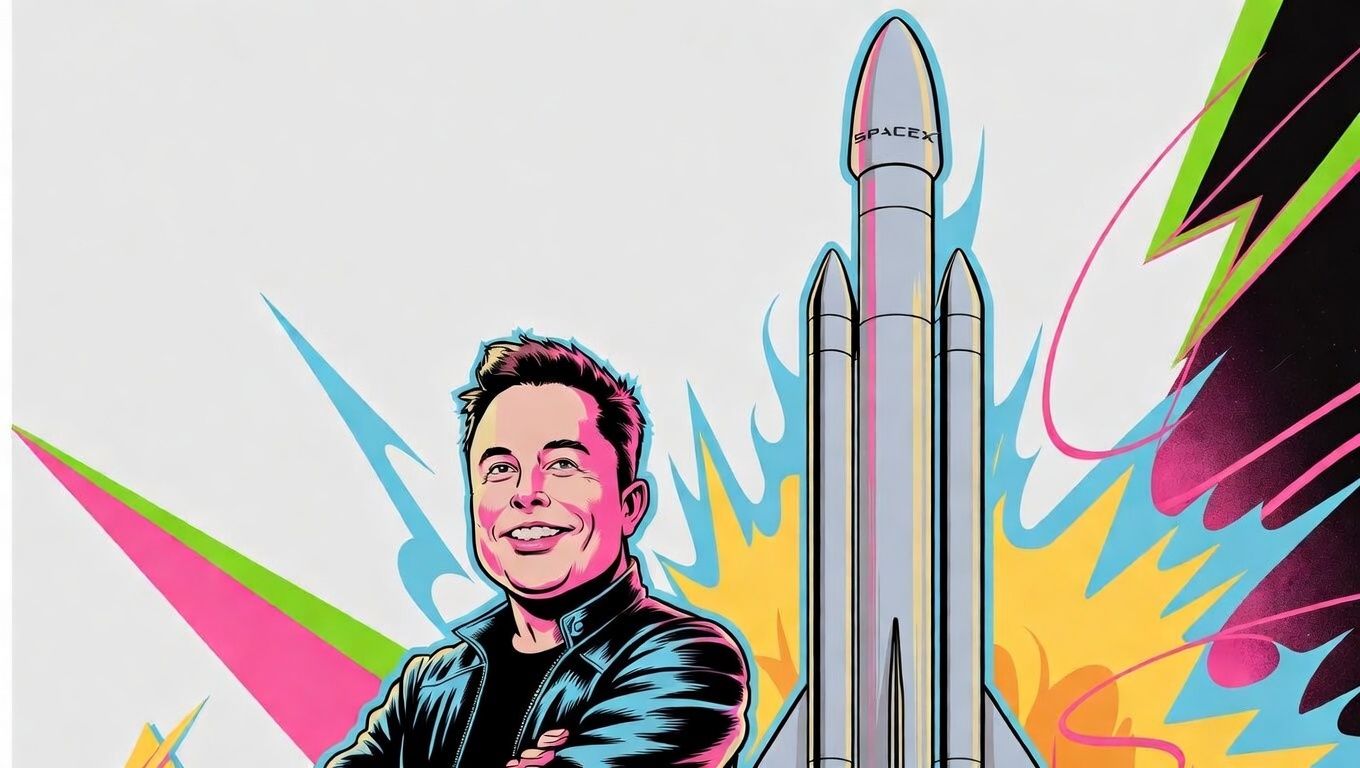
Image source: Ideogram / The Rundown
The Rundown: Elon Musk is engineering what could be the largest — and strangest — IPO in history, plotting a mid‑June SpaceX listing that may raise tens of billions of dollars, while carving out an unprecedented 30% of shares for retail investors.
The details:
SpaceX is targeting a mid‑June IPO window, with internal timelines synced to Musk’s birthday and fundraising estimates ranging from about $40B–$75B.
The company is weighing a valuation of around $1.5T trillion after folding xAI into SpaceX, a move designed to sell investors on orbital AI data centers.
Instead of the typical banker‑led roadshow, Musk wants investors flown into SpaceX’s campus to tour production lines and possibly watch launches.
Meanwhile, banks are reportedly confined to narrowly defined “lanes” and a retail tranche that could hit 30% of the float.
Why it matters: The IPO could make SpaceX one of the most valuable public companies on the planet while testing how far markets are willing to go on a Musk growth story. It also flips the IPO script by handing an unusually large slice to retail investors, giving Musk fans front‑row seats to one of the biggest deals of the decade.
META

Image source: Meta
The Rundown: Meta and EssilorLuxottica are gearing up to launch two new Ray-Ban smart glasses, after fresh FCC filings revealed production-ready hardware with upgraded Wi-Fi 6E connectivity and a new charging case design.
The details:
New FCC filings confirm the glasses, codenamed Scriber and Blazer, are production hardware, with reports suggesting a launch could come in weeks.
The Blazer will come in standard and large sizes. Both models keep a portable charging case, with what is predicted to be a significant hardware refresh.
The filings add support for Wi‑Fi 6/UNII‑4 at 5.9 GHz, a bandwidth upgrade that should boost livestreaming and on‑device Meta AI capabilities.
Meta is positioning Ray-Ban glasses as its primary AI hardware play, with the line already selling in the millions.
Why it matters: Meta is doubling down on Ray-Ban, pushing new Scriber and Blazer AI glasses toward launch as it scales production of smart specs already selling in the millions. Timing is complicated, with the devices arriving amid privacy and legal backlash over claims that Meta glasses funnel user footage to offshore contractors.
SHIELD AI
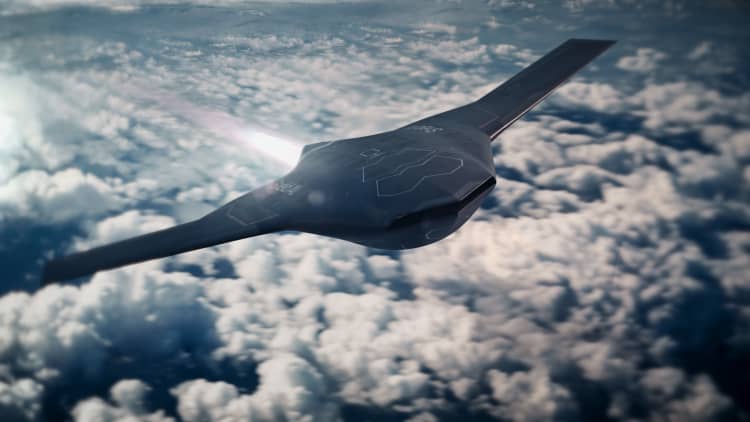
Image source: Shield AI
The Rundown: Shield AI, the San Diego startup building AI pilots for military aircraft, raised $1.5B and more than doubled its valuation to $12.7B — and it already has a contract to prove the technology works in the field.
The details:
The U.S. Air Force tapped Shield’s Hivemind software to power a program in which autonomous drone “wingmen” fly alongside human combat pilots.
Hivemind will also run on the Fury autonomous jet built by rival Anduril, which makes its own software stack and is eyeing an $8B raise at a $60B valuation.
Shield AI is already putting its new funding to work, acquiring Aechelon Technology, whose hyper-detailed simulators train U.S. pilots.
Why it matters: Shield AI’s new $1.5B funding round shows how quickly defense dollars are flowing into AI software capable of steering warplanes, and it sets up a direct rivalry with Anduril as both companies race to own the “brain” of autonomous combat aircraft.
META

Image source: Meta
The Rundown: Meta bumped its planned investment in a new El Paso, Texas, data center from $1.5B to more than $10B — a sevenfold increase — as it races to build the compute backbone for its next generation of AI models.
The details:
Meta’s investment will grow the facility to 3.1M square feet, up from the originally planned 1.2M, with the site designed to scale to 1 gigawatt of capacity.
The gigawatt-scale facility is expected to come online in 2028, making it one of Meta’s largest data centers globally.
At peak construction, approximately 4K workers will be on site, with more than 300 permanent roles once the center is fully operational.
Meta has also committed to adding over 5K megawatts of clean power to the grid and will work with nonprofits to offset the facility’s water burden.
Why it matters: Meta expects its total capital expenditures in 2026 to land between $115B and $135B, with AI infrastructure at the core — a massive jump from the $72.2B spent last year. Meta is also spending on an astronomical scale to stay in the top tier of foundation-model players, instead of leaning on outside cloud providers.
QUICK HITS
NASA is ditching its planned lunar-orbit station and instead redirecting its hardware into a $20B moon base to be built on the surface over the next seven years.
A jury ordered Meta to pay $375M for misleading users about the safety of Facebook, Instagram, and WhatsApp and enabling child sexual exploitation on its platforms.
Apple discontinued the Mac Pro, with no plans for any future Mac Pro hardware, and Mac Studio instead being repositioned as the flagship pro desktop.
Trump plans to appoint Mark Zuckerberg, Larry Ellison, and Jensen Huang to a White House tech panel that will advise on AI policy and other technology issues.
A Los Angeles jury ordered Meta and YouTube to pay a woman $3M for harm caused by their addictive apps she used as a child.
WhatsApp’s upgraded Writing Help uses AI to draft suggested replies from your chats, plus it adds photo touchups, chat transfer, and multi-account support on iOS.
Epstein survivors are suing the Trump administration and Google for exposing their IDs in released case files and for keeping their private info visible in search results.
Netflix raised prices again, increasing its ad-supported plan to $8.99 a month, its standard ad-free plan to $19.99, and its premium tier to $26.99.
Meta is laying off several hundred employees across Reality Labs, Facebook, and other units as it restructures and shifts more investment toward AI.
Japanese lunar startup ispace pushed back its NASA-sponsored moon landing mission to 2030 and plans to shrink its global workforce.
Apple now forces UK users to prove they’re 18 via payment details or ID to keep full iPhone and iCloud access, else stricter safety filters kick in.
An 82-year-old Kentucky farmer turned down a $26M offer from an unnamed AI company to carve out part of her 1,200-acre farm for a data center.
Honda pulled the plug on the two Afeela-branded EVs it was co-developing with Sony, as the Sony Honda Mobility joint venture winds down its EV plans.
COMMUNITY
Read our last AI newsletter: Meta’s new open-source brain AI
Read our last Tech newsletter: The deep-sea luxury race is back
Read our last Robotics newsletter: Amazon now has a kid-sized humanoid
Today’s AI tool guide: Use Perplexity Computer as a personal shopper
That's it for today's tech rundown!We'd love to hear your feedback on today's newsletter so we can continue to improve The Rundown experience for you. |
See you soon,
Rowan, Joey, Zach, Shubham, and Jennifer — The Rundown’s editorial team
Reply