- The Rundown Tech
- Posts
- Meta sued over Ray-Ban privacy
Meta sued over Ray-Ban privacy
PLUS: Apple's new $599 MacBook Neo


Jennifer Mossalgue, Rowan Cheung, Shubham Sharma & Zach Mink
March 06, 2026

Good morning, tech enthusiasts. Meta’s Ray-Ban smart glasses are at the center of a nightmarish privacy lawsuit: a proposed U.S. class action alleges the company let human reviewers access users’ intimate recordings, despite marketing that suggested stronger protections.
The case is raising a simple, unsettling question for smart-glasses users: when the camera is on, who might really be watching?
In today’s tech rundown:
Meta’s AI glasses hit with privacy suit
Apple’s $599 MacBook for Chromebook crowd
Oura acquires gesture-recognition startup
Science Corp nabs $230M for brain implant
Quick hits on other tech news
LATEST DEVELOPMENTS
META

Image source: Ideogram / The Rundown
The Rundown: Meta is facing a proposed U.S. class-action lawsuit alleging that its Ray-Ban Meta AI smart glasses secretly routed intimate user videos to low-paid human reviewers, violating the company’s own privacy promises.
The details:
A proposed U.S. class-action lawsuit accuses Meta and Luxottica of misleading buyers about the privacy protections of Ray-Ban smart glasses.
Plaintiffs say Meta failed to disclose that contractors and employees could view user recordings, including nudity, sex acts, and people using the bathroom.
The case follows reports that low-paid reviewers in Kenya were required to watch and label intimate clips as part of Meta’s safety and AI-training pipeline.
Regulators, including authorities in the U.K., are also probing whether Meta’s data practices for the glasses meet transparency and consent standards.
Why it matters: The complaint says Meta misled customers about this human-review pipeline and put millions at risk of stalking, extortion, and identity theft, while Meta counters that contractors review shared Meta AI content to improve the glasses’ user experience and that this human involvement is disclosed in its policy fine print.
APPLE
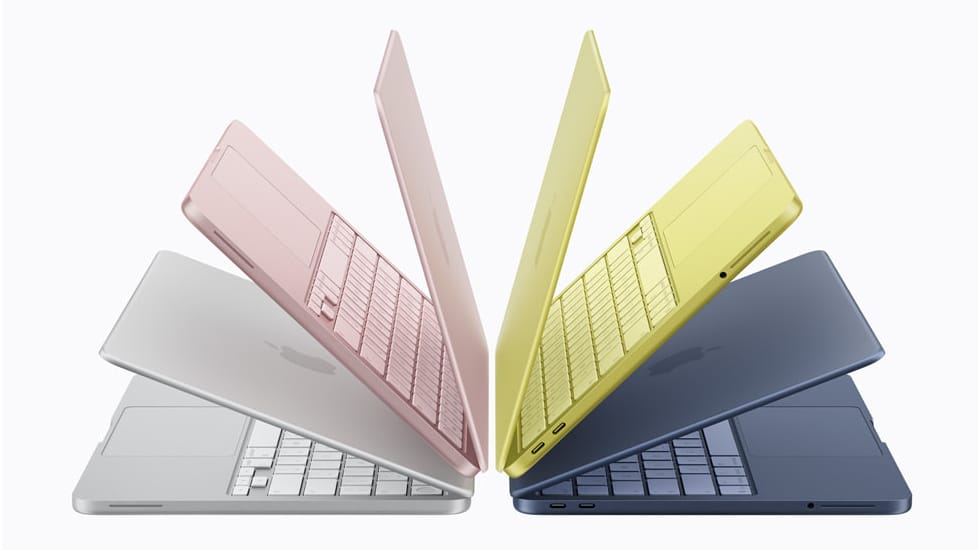
Image source: Apple
The Rundown: Apple launched a $599, iPhone-chip-powered MacBook Neo that brings bright colors and bargain pricing to directly challenge low-cost Windows laptops and Chromebooks. It’s set to hit stores on March 11.
The details:
The Neo uses an iPhone‑class A‑series chip paired with up to 16GB of unified memory and fast NVMe storage, aiming for all‑day battery life.
Apple is offering the Neo in multiple bright colors, visually positioning it closer to iPads and older plastic MacBooks than its current pro-focused lineup.
The machine targets students and first-time buyers who currently gravitate toward Chromebooks and cheaper Windows laptops.
By undercutting traditional MacBook prices, Apple is moving aggressively into a segment long dominated by PC OEMs and Google’s education partners.
Why it matters: Apple is putting real pressure on bargain Windows laptops and Chromebooks with a $599 MacBook that still feels like a “real” Mac. By pairing an iPhone-class chip with a colorful, fanless design and long battery life, the MacBook Neo aims to hook first-time buyers without undercutting its pricier line.
OURA

Image source: Oura
The Rundown: Smart ring maker Oura just acquired Helsinki-based gesture-recognition startup Doublepoint to fuse voice and micro‑hand movements into its rings, turning the health tracker into a discreet control hub for next‑gen wearable AI.
The details:
The deal is designed to layer gesture recognition and voice controls on top of Oura’s continuous health sensing to trigger features without screens.
All of Doublepoint’s team, including its four co-founders, will join Oura, forming a new hub for interaction design inside the Finnish wearable company.
Oura, valued at $11B, has sold more than 5.5M rings and expects sales to top $1.5B in 2026 as smart ring shipments jumped about 51% last year.
This is Oura’s fourth recent acquisition, following Sparta Science, Veri, and Proxy, each adding a new layer to what was primarily a sleep tracker.
Why it matters: Oura CEO Tom Hale said gesture controls, paired with voice inputs, could become central to future versions of the ring, though meaningful implementation isn’t happening right away. Still, the acquisition helps Oura defend its smart ring lead in the category, as wearables start moving toward a post-screen interaction model.
SCIENCE CORPORATION

Image source: Science Corp (PRIMA retinal implant)
The Rundown: Neuralink co-founder Max Hodak’s neurotech startup Science Corporation closed a $230M Series C, valuing the company at roughly $1.5B and putting serious fuel behind its bid to restore sight to patients blinded by retinal disease.
The details:
The funds will accelerate clinical trials and regulatory approvals in the U.S. and Europe for PRIMA, a subretinal chip paired with camera-equipped glasses.
In early trials with 47 patients, PRIMA has helped people with advanced macular degeneration recognize letters, numbers, and short words.
Science Corp. is seeking a CE mark in the EU, aiming for mid‑2026 approval with Germany as its first launch market, while it continues talks with the FDA.
Why it matters: Science Corporation’s side projects — from cortical interfaces to organ-preservation tech — show it’s thinking beyond implants to a neurotech platform. That puts it in more direct competition with Neuralink and Precision Neuroscience, which are also racing to own the hardware layer between brains and machines.
QUICK HITS
Oracle is reportedly preparing to cut thousands of jobs as it grapples with a cash crunch caused by massive spending on AI data centers and related infrastructure.
A global Amazon outage left tens of thousands of shoppers facing failed payments and checkout glitches, with Downdetector logging around 20K problem reports.
Online retailer Quince is reportedly in talks with investors to raise a new funding round that would more than double its valuation to above $10B.
Microsoft confirmed that its next-gen Xbox, codenamed Project Helix, is a high-performance console that will run both Xbox and PC games.
U.S. defense tech firm Anduril is raising a multibillion-dollar round that could double last year’s $30B valuation to about $60B.
Researchers built a stable, ultra-bright 300-nanometer OLED pixel using a nano-antenna, enabling full HD displays small enough to fit on a grain of sand.
London-based smartphone maker Nothing launched new phones and headphones in bright colors to counter what its founder calls a “boring” tech market.
Whoop, the maker of connected fitness bands, plans to increase its workforce by about 75% in 2026 by hiring more than 600 people to fuel growth ahead of a likely IPO.
Cluely co-founder and CEO Roy Lee admitted on X that the $7M annual recurring revenue figure he gave TechCrunch last summer was a deliberate lie.
BYD unveiled its Blade Battery 2.0 pack, which can fully charge in just about 10 minutes but only when paired with its new 1.5-megawatt Flash Charging stations.
COMMUNITY
Read our last AI newsletter: OpenAI's 'best model ever' goes live
Read our last Tech newsletter: Apple’s budget iPhone goes AI first
Read our last Robotics newsletter: Waymo has a big problem in Austin
Today’s AI tool guide: Turn an investment memo into a polished slide deck
RSVP to our next workshop on March 12: AI coding bootcamp pt. 1
That's it for today's tech rundown!We'd love to hear your feedback on today's newsletter so we can continue to improve The Rundown experience for you. |
See you soon,
Rowan, Joey, Zach, Shubham, and Jennifer — The Rundown’s editorial team
Reply