- The Rundown Tech
- Posts
- Neuralink's bet to scale brain surgery
Neuralink's bet to scale brain surgery
PLUS: Starlink brings its satellites closer to Earth


Shubham Sharma, Zach Mink, Jennifer Mossalgue & Rowan Cheung
January 02, 2026

Good morning, tech enthusiasts. Elon Musk says Neuralink will hit ‘high-volume production’ for its brain chips this year, with implant surgery becoming ‘almost entirely automated.’
So far, only a handful of patients have received the device, and full FDA approval is still years off. The bigger question: Is mass-producing brain surgery where we really want to go?
In today’s tech rundown:
Musk will soon mass-produce brain implants
SpaceX drops Starlink satellites to cut space junk
MIT shrinks IV antibody infusions into a single shot
Norway’s EV revolution hits record highs
Quick hits on other tech news
LATEST DEVELOPMENTS
NEURALINK

Image source: Ideogram / The Rundown
The Rundown: Elon Musk said on X that Neuralink aims for “high-volume production” of its brain implants and automated neurosurgery this year — pushing brain-computer interfaces out of bespoke experiments and into scalable medicine.
The details:
Neuralink says about a dozen severely paralyzed patients now use its implant to control a computer cursor and play games using only their thoughts.
The first wave of applications targets people with serious neurological disorders, helping them communicate and manage daily tasks.
Musk said the device’s threads will pass through the dura — the protective membrane around the brain — without surgeons needing to remove it.
Neuralink still needs to clear clinical trials and secure full FDA approval before it can move from tightly controlled experiments to routine medical use in the U.S.
Why it matters: Musk has previously talked about scaling to more than a thousand patients by 2026, backed by a hiring spree. If he can pull that off ahead of rivals like Synchron and Precision Neuroscience, the company will be first to test whether BCIs can move from a medical moonshot to something closer to a commercial product.
SPACEX

Image source: SpaceX
The Rundown: SpaceX is lowering its Starlink megaconstellation from 550 km to 480 km this year — not for better internet, but to stop satellites from crashing into each other and triggering a wave of space junk.
The details:
The change will apply to around 4K Starlink units currently flying at the higher orbit and is expected to be completed within the year.
Flying lower increases atmospheric drag, which cuts collision risk and pulls dead satellites out of orbit faster.
The move follows a December incident where a Starlink satellite had an “unusual kinetic incident” and spewed debris.
Starlink now flies roughly 10K satellites, beaming broadband to everyone from homeowners to governments and Fortune 500s across multiple continents.
Why it matters: This is a rare example of Starlink tweaking its design to ease congestion, cut collision risk, and ensure dead satellites fall out of the sky faster instead of lingering as long‑lived junk. The move sets a precedent for rivals, that “move fast and launch things” now has to coexist with basic rules of orbital sustainability.
MIT
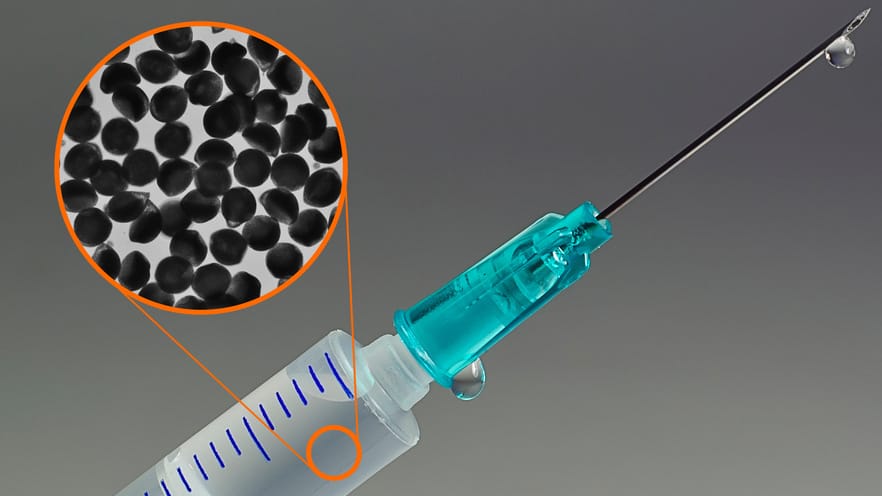
Image source: Christine Daniloff, MIT
The Rundown: MIT researchers just cracked a way to shrink therapeutic antibodies into injectable nanoparticles, swapping multi-hour IV infusions for a quick jab — a potential game-changer for millions of patients who depend on antibody treatments.
The details:
The method concentrates antibodies to roughly 360 mg per milliliter — up to 36x denser than standard formulations.
Engineers emulsify tiny drug droplets into a specialized liquid, dry them into nanoparticles, then rehydrate for injection.
The process uses standard, continuous-flow equipment instead of lab steps like centrifuges, so it can be scaled up to make large batches reliably.
A full dose fits into a 2-milliliter syringe instead of an IV bag hanging for hours, and the medications can sit in a fridge for months without going bad.
Why it matters: Turning IV infusions into quick shots could make powerful antibody drugs far easier to get, especially for people who live far from hospitals or cannot afford to lose hours in an infusion chair. A simple, factory‑friendly process that packs a full dose into a single syringe opens the door to cheaper, more convenient treatment.
EVS
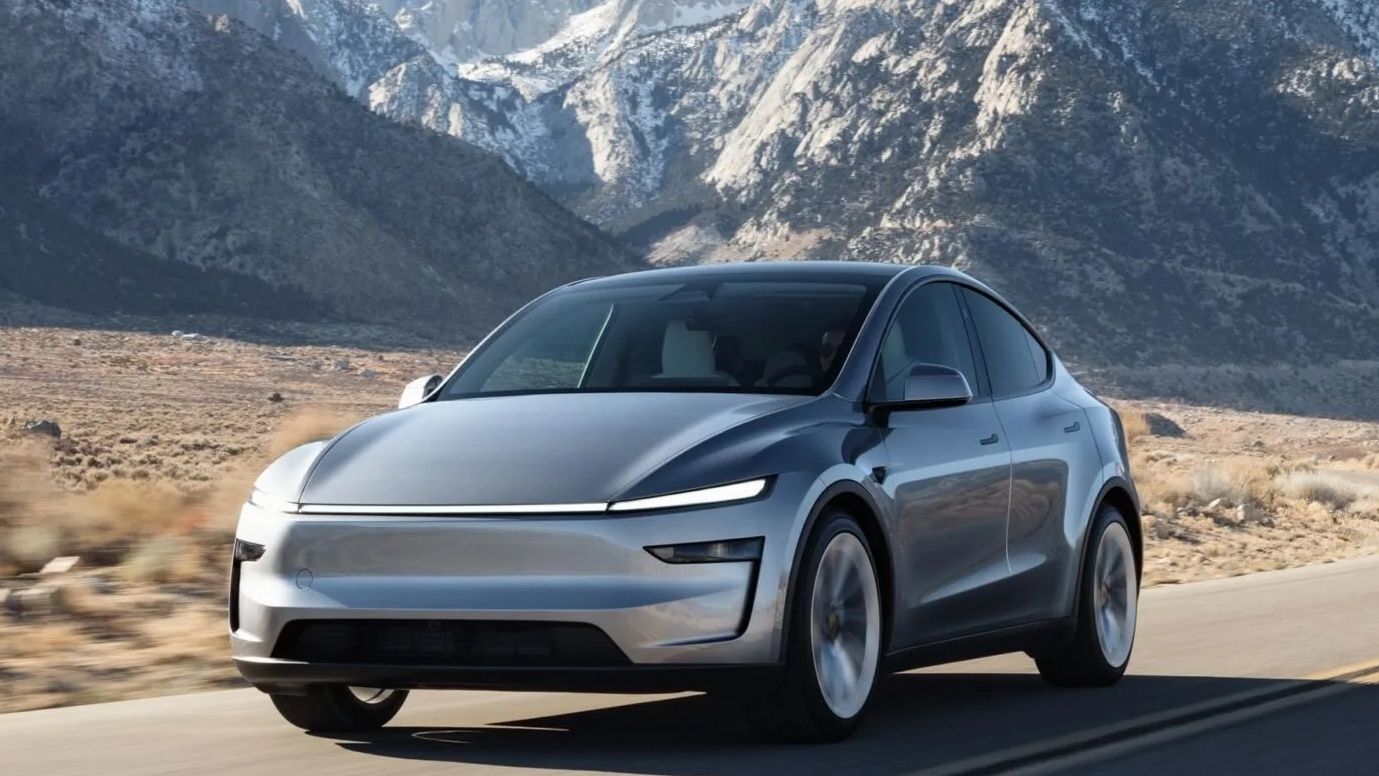
Image source: Tesla
The Rundown: Norway closed out 2025 with 96% of new cars sold running purely on batteries and nearly 98% sporting a plug when hybrids are counted — completing one of the fastest fossil-fuel phaseouts any country has ever pulled off.
The details:
Out of 179,549 new cars registered in 2025, 95.9% were fully electric, and 97.5% had a plug when hybrids are counted.
Tesla dominated with a 19.1% market share, and the Model Y outsold the second-place VW ID.4 by more than three to one.
Norway spent two decades tilting the playing field with massive tax breaks, free tolls and ferries, bus-lane access, and a dense fast-charging network.
As Norway’s EV market matures, it is scaling back perks for pricier models but keeping incentives in place to help retire the remaining fossil-fuel cars.
Why it matters: Norway shows that aggressive incentives, infrastructure build-out, and clear phase-out dates can flip an entire car market from fossil fuel to electric in barely a decade. Its success gives other countries a real-world blueprint for cutting oil demand and transport emissions much faster than most current plans.
QUICK HITS
Apple reportedly slashed production and marketing of its high-priced Vision Pro headset after weaker-than-expected demand exposed limited mainstream appeal.
Governments are tightening rules on kids’ social media use worldwide, with countries like Australia, France, Denmark, Malaysia, and Norway moving toward under-16 bans.
China conducted its second attempt to land a reusable Long March 12A rocket booster, failing to recover the stage but successfully reaching orbit and gathering data.
British clean-energy supplier Octopus Energy is spinning off Kraken, its AI “operating system” for utility companies, into a software business valued at $8.65B.
TikTok owner ByteDance plans to spend about $14B in 2026 on Nvidia AI chips, pending U.S. approval for purchases of the latest H200 processors.
Pickle, a California startup, opened U.S.-only reservations for Pickle 1, a pair of AI-powered AR “soul computer” glasses that observe, remember, and anticipate daily life.
Trump Mobile’s $499 gold T1 smartphone, run by Trump’s sons, has been delayed again, with the company blaming the holdup on the U.S. government shutdown.
LG launched the Gallery TV, a wall-mounted “art TV” that mimics Samsung’s Frame with swappable frames and an always-on artwork mode.
Feds are targeting “The Com,” a teen-heavy hacking network behind Scattered Spider that recruits kids to run social-engineering ransomware attacks on major companies.
Uber is reportedly in talks to acquire SpotHero, a parking app that lets drivers reserve spaces in advance, as part of its push to expand beyond ride-hailing.
Tech startups are reportedly stocking offices with free nicotine pouches as a productivity perk, and installing nicotine-pouch vending machines and fridges.
COMMUNITY
Read our last AI newsletter: Instagram's AI-driven identity crisis
Read our last Tech newsletter: Meta buys AI startup Manus for $2B
Read our last Robotics newsletter: Robotaxis that plug into your brain
Today’s AI tool guide: Use Codex to write code on the web with AI agents
That's it for today's tech rundown!We'd love to hear your feedback on today's newsletter so we can continue to improve The Rundown experience for you. |
See you soon,
Rowan, Joey, Zach, Shubham, and Jennifer — The Rundown’s editorial team
Reply