- The Rundown Tech
- Posts
- Meta buys AI startup Manus for $2B
Meta buys AI startup Manus for $2B
PLUS: OpenAI is hiring for the hardest job in AI


Jennifer Mossalgue & Rowan Cheung
December 30, 2025

Good morning, tech enthusiasts. Meta is reportedly acquiring Manus, a Singapore-based AI startup that rocketed from a viral demo to $100M+ in ARR in under a year, in a deal worth about $2B.
The prize is revenue-generating AI agents that can handle end-to-end digital tasks across Facebook, Instagram, and WhatsApp — but Manus’s Chinese-rooted past risks turning a splashy AI acquisition into a geopolitical stress test.
In today’s tech rundown:
Meta snaps up AI startup Manus for $2B
OpenAI hunts ‘head of preparedness’
Nest co-founder’s Mill snags Whole Foods deal
Nvidia and Samsung test AI hardware at CES
Quick hits on other tech news
LATEST DEVELOPMENTS
META
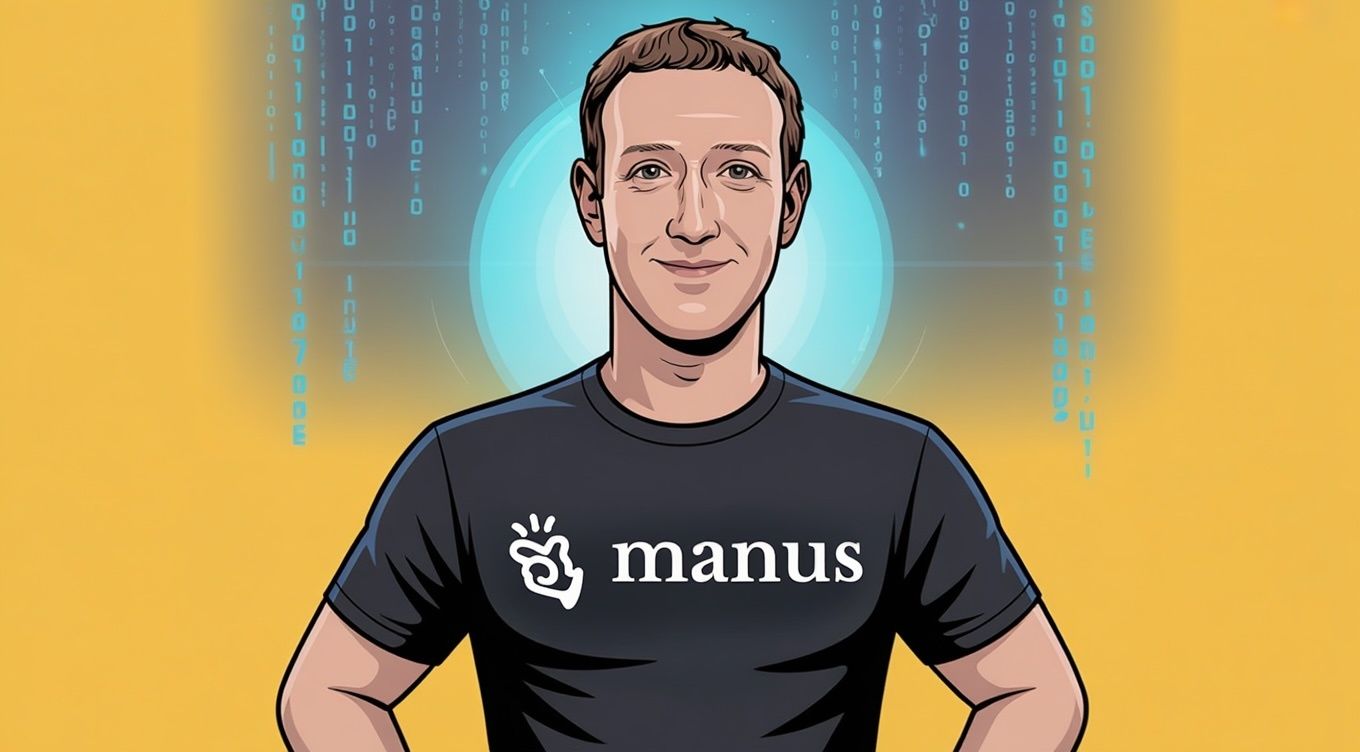
Image source: Ideogram
The Rundown: Meta is acquiring Manus, a red-hot Singapore-based AI startup that builds task-running agents, for approximately $2B — one of the first major acquisitions of a generative AI company with substantial revenue.
The details:
Manus rocketed from a viral demo to over $100M in annual recurring revenue in eight months, claiming millions of users for its AI agents.
Meta reportedly plans to keep Manus operating independently while integrating its agents into Facebook, Instagram, and WhatsApp, running alongside Meta AI.
Manus sells task-running AI agents that can handle white-collar tasks end-to-end, from screening job candidates to planning trips.
To preempt regulatory blowback, Meta is pledging to eliminate all Chinese ownership stakes and shut down Manus’s services in China.
Why it matters: Meta gets a revenue-generating AI product to justify its eye-watering infrastructure spend and a new automation layer for its social empire. But the deal also drags Meta deeper into the U.S.-China tech war, testing whether Washington will accept a Chinese-rooted acquisition, even one that Meta plans to separate from Beijing.
OPENAI
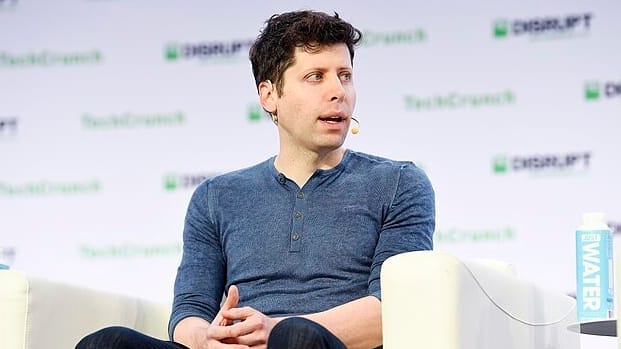
Image source: TechCrunch/Wikimedia Commons
The Rundown: OpenAI is hiring a senior “head of preparedness” at a roughly $550K salary plus equity to stress-test its most advanced models and game out how they could be weaponized or spiral beyond human control.
The details:
Sam Altman has billed the role as “stressful,” positioning it as frontline work anticipating harmful AI behavior, from rogue agents to large-scale misuse.
The hire will lead OpenAI’s internal watchdog efforts, probing catastrophic risk scenarios the company’s preparedness team has studied since 2023.
Microsoft AI chief Mustafa Suleyman told the BBC that anyone who isn’t at least a little afraid of where AI is right now “isn’t paying attention.”
OpenAI’s last head of preparedness moved into an AI reasoning role in 2024, and several senior safety leaders left the company or shifted to other positions.
Why it matters: OpenAI is hiring someone to stress-test catastrophic risks, from phishing attacks to bioweapons to the possibility of AIs that could “turn against us.” Yet AI safety remains voluntary and mostly unregulated, and the company’s Preparedness Framework now lets it “adjust” requirements if rivals ship riskier models first.
MILL/WHOLE FOODS

Image source: Mill
The Rundown: Mill, the food-waste startup from Nest co-founder Matt Rogers, just signed Whole Foods as its first major enterprise customer, with the grocer set to deploy Mill’s commercial bins chainwide in 2027.
The details:
The bins grind and dehydrate produce scraps to slash landfill costs while converting leftovers into chicken feed for Whole Foods’ egg suppliers.
Mill’s systems track data on what gets tossed, helping Whole Foods spot waste patterns, reduce shrinkage, and keep sellable items on shelves longer.
The partnership is part of Mill’s push beyond households into commercial and, eventually, municipal customers.
Mill launched its sleek, Nest-grade household food-waste bins a few years ago and began talks with Whole Foods about a year ago.
Why it matters: Mill is proving you can parlay a polished consumer gadget into enterprise contracts, then layer in AI to turn waste bins into diagnostic tools that don’t just process trash but help prevent it. The Whole Foods deal shows how a startup can leverage modern design and data analysis to crack a massive, low-tech market.
CES
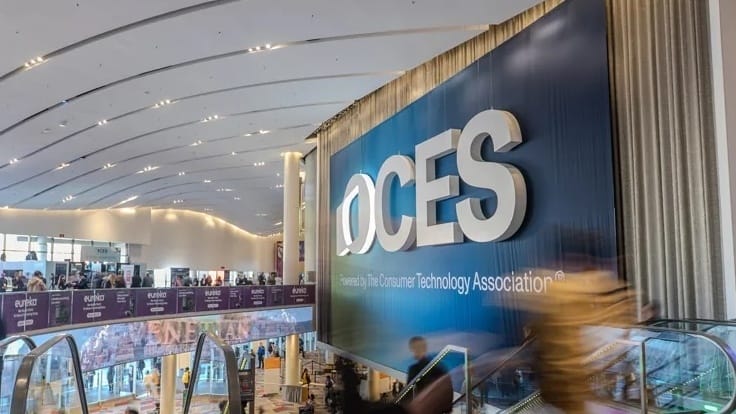
Image source: CES
The Rundown: Nvidia, Samsung, Lenovo, and other tech giants are descending on CES in Las Vegas with a show floor full of laptops, wearables, and smart glasses where on-device AI is pushed front and center, Bloomberg reports.
The details:
Nvidia is expected to showcase new PC chips aimed at turning laptops into portable AI workstations, while Samsung leans on AI across TVs and phones.
Lenovo is rolling out AI-focused PCs built to run local copilots and personalization, betting that extra privacy and lower latency will hook buyers.
LG is debuting a Dolby-powered modular home audio system and showing off CLOiD, a humanoid designed for household chores.
Robotics gets its own dedicated hall this year, packed with humanoid and service bots pitched for home companionship, elder care, and factory floors.
Why it matters: CES is where the industry will learn whether consumers actually want to pay for a new wave of AI gadgets, robots, and “smarter” TVs, or if AI remains just a free software layer on existing devices. The answer could shape how aggressively tech giants pour money into dedicated AI hardware, robots, and wearables.
QUICK HITS
DigitalBridge shares jumped after news that Japan’s SoftBank has agreed to acquire the AI data-center investment firm for about $4B in cash.
The AI boom has fueled about $70B in data center deal talks this year, as investors race to lock up infrastructure for compute-hungry models.
Samsung will add a native Google Photos app to its TVs in 2026, starting with an exclusive six-month Memories experience and later layering on AI-powered tools.
Google is letting users change their @gmail.com address while keeping the old address as an alias that still works for sign‑in and receives mail in the same inbox.
India’s startups raised about $11B in 2025 as deal volume dropped nearly 40% and investors became choosier, tilting toward early-stage, application-led AI and deep tech.
New York Governor Kathy Hochul approved a law forcing social platforms to flash warning labels to young users before hooking them with features like infinite scroll.
Novo Nordisk’s stock has been hammered as investors doubt it can keep turning its blockbuster GLP-1 drug semaglutide into long-term profits beyond weight loss.
Russia and Kazakhstan postponed the debut launch of their new Soyuz-5 rocket under the joint Baiterek project, citing the need for additional checks.
COMMUNITY
Read our last AI newsletter: YouTube's 'AI slop' takeover
Read our last Tech newsletter: OpenAI eyes $830B mega valuation
Read our last Robotics newsletter: World’s smallest autonomous robots
Today’s AI tool guide: Automate pre-meeting research with Perplexity
Watch our last live workshop: NotebookLM for Work
That's it for today's tech rundown!We'd love to hear your feedback on today's newsletter so we can continue to improve The Rundown experience for you. |
See you soon,
Rowan, Jennifer, and Joey—The Rundown’s editorial team
Reply