- The Rundown Tech
- Posts
- Humans head back to the moon
Humans head back to the moon
PLUS: Musk looks to merge his empires


Jennifer Mossalgue, Rowan Cheung, Shubham Sharma & Zach Mink
January 30, 2026

Good morning, tech enthusiasts. NASA just rolled its massive moon rocket to the launchpad — and four astronauts are now in quarantine, waiting to become the first humans to leave low-Earth orbit in over 50 years.
If all goes well, they’ll fly farther from Earth than anyone in history. The launch window opens up Feb. 8
In today’s tech rundown:
Artemis II: NASA’s first moon crew in 50 years
Musk wants to merge his empires
Apple hits record $144B quarter on iPhone sales
Tech optimists lobby to deregulate aging
Quick hits on other tech news
LATEST DEVELOPMENTS
SPACE TECH

Image source: NASA
The Rundown: NASA’s Artemis II mission will send four astronauts on a 10‑day loop around the moon — the first human voyage beyond low‑Earth orbit in more than half a century, and the shakedown cruise for America’s return to deep‑space exploration.
The details:
NASA has rolled the Artemis II Space Launch System and Orion spacecraft out to Pad 39B and is running final prelaunch checks at the Kennedy Space Center.
The four-person crew has entered a 14-day health‑stabilization quarantine to avoid any last‑minute bugs that could delay launch.
A critical “wet dress rehearsal” on the pad will see teams load more than 700K gallons of supercold propellants into SLS and run a full simulated countdown.
NASA is currently targeting a launch window that opens Sunday, Feb. 8, with planned fueling of the rocket slated for Monday, Feb. 2.
Why it matters: Artemis II will send the crew on a roughly 10‑day free‑return loop around the moon, flying farther from Earth than any humans in history and validating Orion’s life‑support, navigation, and high‑speed reentry systems. Success would clear the way for Artemis III, the first planned lunar landing of the program.
TOGETHER WITH MICROSOFT

The Rundown: Microsoft’s GitHub Copilot accelerates your innovation on any platform or code repository with agentic AI software development tools that meet you where you are.
GitHub Copilot lets you:
Empower your developers by infusing an AI code assistant into their favorite IDE
Reimagine developer workflows driven by agentic AI
Customize and extend GitHub Copilot for your org and toolchain
ELON MUSK
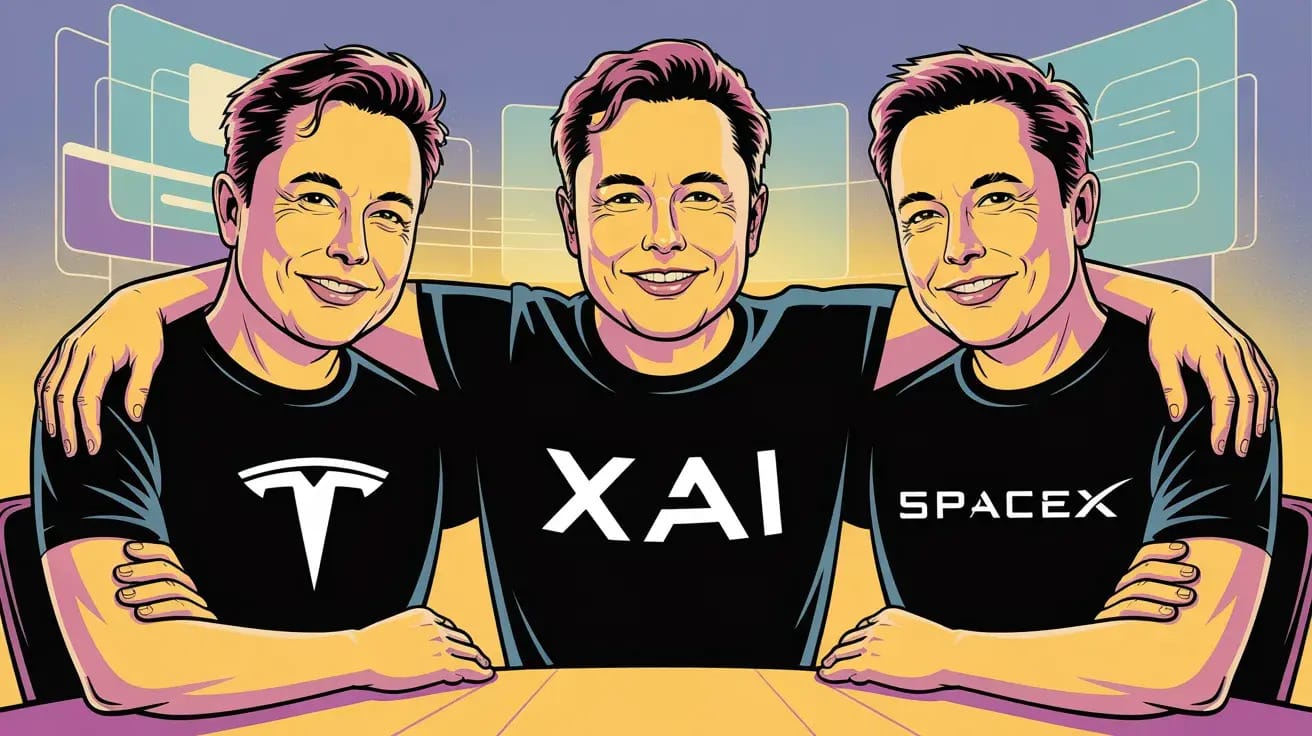
Image source: Ideogram / The Rundown
The Rundown: Elon Musk is reportedly exploring a merger that would combine SpaceX with xAI or Tesla — or with both — into one super-conglomerate, potentially ahead of a monster IPO that could value SpaceX at $1.5T.
The details:
SpaceX is in discussions to merge with xAI ahead of a June 2026 IPO worth up to $50B, cheekily timed to a rare planetary alignment and Musk’s birthday.
Separately, the space tech giant has discussed the feasibility of a tie-up with Tesla — an idea some investors are pushing.
Two entities with “merger sub” in their names were established in Nevada on January 21, with SpaceX CFO Bret Johnsen listed as an officer.
SpaceX is targeting an IPO that would value the company at about $1.5T, which would make it the biggest IPO of all time.
Why it matters: Musk has long been criticized for spreading himself too thin across too many companies. A mega-merger would flip that narrative — consolidating rockets, satellites, AI, social media, and possibly EVs into a single publicly traded juggernaut. As one investor put it: “You want to invest in Elon? Here you go. You get all this.”
APPLE

Image source: Ideogram / The Rundown
The Rundown: Apple just posted the biggest quarter in its history — $143.8B in revenue, up 16% year-over-year — driven by what CEO Tim Cook called “simply staggering” iPhone demand.
The details:
iPhone revenue surged 23% to $85.27B, setting an all-time record across every geographic segment, with the iPhone 17 lineup driving the surge.
China sales rebounded 38% to $25.5B, with Cook noting Apple set “an all-time record for upgraders in mainland China.”
Services also hit a record $26.34B (up 14%), and Apple now has more than 2.5B active devices worldwide — the most ever.
It plans to prioritize premium iPhone launches this year, including its first foldable model and two flagships, while pushing the baseline iPhone 18 to 2027.
Why it matters: Apple’s smartphone business reportedly grew faster than the overall market, gaining share against competitors. But the real signal is in what comes next — Apple is betting its 2026 roadmap on premium-only launches and a foldable phone, doubling down on high-margin hardware at the expense of the mass market.
BIOTECH
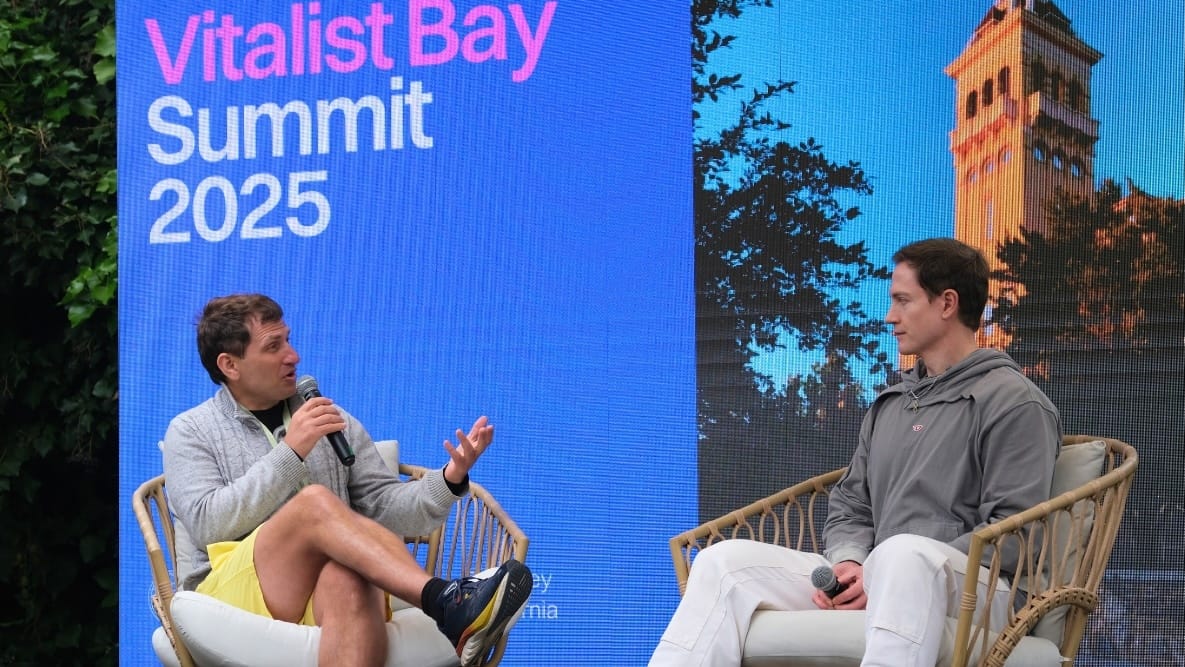
Image source: Vitalist Bay Summit (Adam Gries & Bryan Johnson)
The Rundown: A controversial movement called Vitalism is gaining ground in the longevity landscape, and it’s racking up wins. Detailed in the MIT Technology Review, this hardcore faction argues that defeating death should be a top government priority.
The details:
Founded by Nathan Cheng and Adam Gries, Vitalism treats death itself as humanity’s core problem and calls for a “longevity revolution.”
Vitalists helped pass Montana’s experimental treatment law and expand New Hampshire’s right-to-try legislation
The founders are recruiting for six federal positions controlling billions in funding; Harvard and Stanford faculty have spoken at their events.
Sixteen biotech companies carry the official Vitalist stamp — revocable if they “adopt apologetic narratives that accept aging or death."
Why it matters: Where Bryan Johnson has become longevity’s most visible evangelist, the Vitalists are quietly building infrastructure: a nonprofit foundation, a biotech certification program, and a recruitment pipeline for federal positions. Johnson wants to live forever. These people want the government to help him do it.
QUICK HITS
Samsung’s new Galaxy Z TriFold, the first trifold sold in the U.S., launches today for $2,899, making it the most expensive phone on the U.S. market.
U.S. agencies are probing whistleblower claims that Meta staff could read end‑to‑end encrypted WhatsApp chats, undermining the app’s core privacy promise.
Google is joining a $425M round in Tesla cofounder JB Straubel’s Redwood Materials, keeping the battery‑recycling and energy‑storage startup valued near $6B.
Grubhub, now owned by Wonder Group, is scrapping delivery and service fees on all restaurant orders over $50 in a bid to lure customers from DoorDash and Uber Eats.
Amazon announced it is laying off 16K employees across the company, marking the second major round of cuts within three months after 14K jobs were cut in October.
TikTok joined Snap in settling a landmark lawsuit accusing social media platforms of designing harmful, addictive products, while Meta and YouTube will proceed to trial.
Meta’s Reality Labs VR division lost $19.1B on just $2.2B in 2025 revenue, and Zuck says 2026 losses will stay similarly huge as Meta lays off staff and shutters VR projects.
Philippines outsourcing firms are pouring $24M a year into AI and skills training to keep their call‑center workforce competitive as automation and rival hubs close in.
A U.S. jury found former Google engineer Linwei “Leon” Ding guilty of stealing thousands of AI chip trade secrets to benefit China‑linked firms and his own startup.
The Doomsday Clock has been set to a record‑tight 85 seconds to midnight, reflecting soaring nuclear tensions plus mounting AI, climate, and biosecurity risks.
Spotify says it paid out $11B in royalties to the music industry in 2025, a record annual payout that still leaves questions about how much of that money reaches artists.
COMMUNITY
Read our last AI newsletter: xAI's Grok Imagine climbs the leaderboards
Read our last Tech newsletter: TikTok USA’s epic meltdown
Read our last Robotics newsletter: Waabi nabs $1B in Uber robotaxi deal
Today’s AI tool guide: Build a competitor database with Claude Cowork
RSVP to our next workshop on Feb. 11: Agentic Workflows Bootcamp pt. 1
That's it for today's tech rundown!We'd love to hear your feedback on today's newsletter so we can continue to improve The Rundown experience for you. |
See you soon,
Rowan, Joey, Zach, Shubham, and Jennifer — The Rundown’s editorial team
Reply