- The Rundown Tech
- Posts
- Wikipedia inks deals with Amazon, Meta
Wikipedia inks deals with Amazon, Meta
PLUS: Amazon now mines for copper


Jennifer Mossalgue, Rowan Cheung, Shubham Sharma & Zach Mink
January 16, 2026

Good morning, tech enthusiasts. Wikimedia just put a price tag on one of the internet’s most scraped resources.
The nonprofit behind Wikipedia has signed groundbreaking deals with Amazon, Meta, and Microsoft, turning what was once free-for-all — 65M articles, zero compensation — into a paid offering. As AI chatbots siphon off human readers, the question now is whether Wikipedia can turn this leverage into a sustainable future in the AI age.
In today’s tech rundown:
Wikipedia inks deals with Big Tech
Amazon’s data centers get copper from bacteria
News Corp brings AI into the newsroom
Tiny scanner detects allergens in minutes
Quick hits on other tech news
LATEST DEVELOPMENTS
WIKIPEDIA
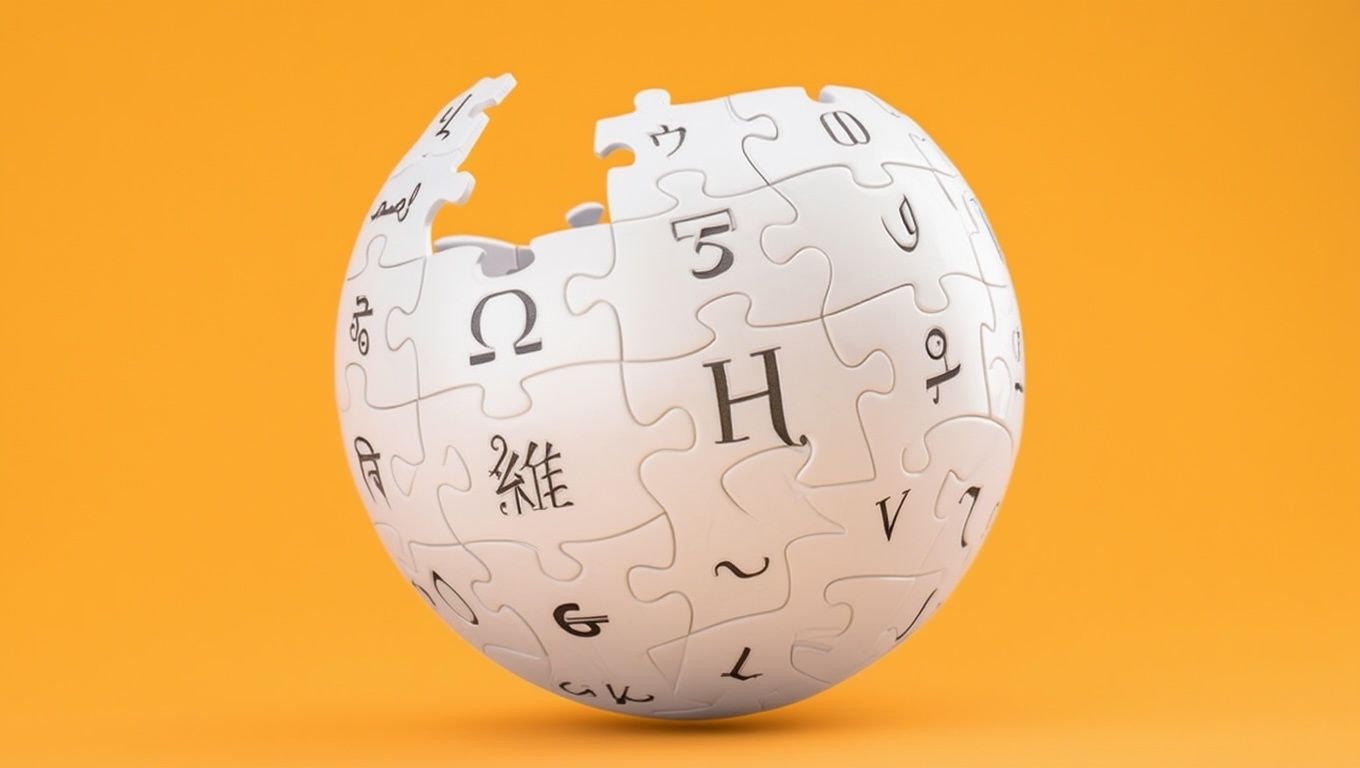
Image source: Wikipedia / Reve
The Rundown: The Wikimedia Foundation just announced deals with Amazon, Meta, Microsoft, Perplexity, and Mistral AI, formalizing what had long been a one-sided relationship where tech giants scraped its 65M articles without compensation.
The details:
The foundation reported an 8% decline in human traffic, attributed to AI chatbots that answer questions directly without sending users to sources.
Disguised bots have been heavily taxing Wikipedia’s servers as they scrape massive amounts of content to train large language models.
Founder Jimmy Wales endorsed the arrangement, noting he’s happy AI trains on Wikipedia's human-curated content compared to alternatives like X.
Wikipedia is also exploring AI tools to automate the drudge work, so its quarter-million volunteers can focus on deliberating, debating, and building consensus.
Why it matters: The new partners join Google, which signed a deal with Wikimedia in 2022, and should help offset infrastructure costs for the nonprofit, which relies on small public donations. Meanwhile, Wikipedia’s editors are pushing back on its testing of generative AI, calling it a “ghastly idea” that could undermine trust in the platform.
AMAZON

Image source: Nuton (harvesting copper cathode)
The Rundown: Amazon Web Services is buying copper extracted by bacteria from an Arizona mine that recently became the U.S.’s first new source of the metal in more than a decade, locking in a lower-carbon supply to feed its voracious AI data centers.
The details:
Amazon has signed a two-year deal to buy copper from Excelsior Mining’s Gunnison project in Arizona, the first new U.S. copper output in 10+ years.
The copper will be produced using Rio Tinto’s Nuton bioleaching tech, which is billed as having a smaller environmental footprint than conventional mining.
The project targets approximately 30K tonnes of refined copper over four years, enough for perhaps power a single mammoth data center.
AI sector growth is expected to boost global copper demand 50% by 2040, though analysts warn supplies could fall far short.
Why it matters: Amazon is reaching past utilities and chipmakers into the dirty, capital-intensive world of mining — a sign that Big Tech now sees raw materials as strategic assets. AI data centers are copper-hungry beasts, and with EVs and clean energy already straining supply, expect more cloud giants to lock in deals before rivals do.
SYMBOLIC AI
Image source: Symbolic AI
The Rundown: Rupert Murdoch’s News Corp just signed a major deal with Symbolic, a stealthy AI startup founded by former eBay CEO Devin Wenig and Ars Technica co-founder Jon Stoke to slash newsroom research time by up to 90%.
The details:
Symbolic says it functions as an automated AI editor that unifies research, writing, and publishing into a single platform.
Dow Jones Newswires — the service behind the Wall Street Journal, Barron’s, and MarketWatch — will be the first to deploy the tech as part of its workflow.
The platform tackles everything from audio transcription and document extraction to fact-checking, headline optimization, and SEO guidance.
Wenig calls the partnership “a watershed moment” and predicts no media or communications business will stay competitive without a similar approach.
Why it matters: Major outlets like the New York Times, BBC, and Reuters have already built proprietary AI tools into their workflows — and News Corp itself signed a multi-year licensing deal with OpenAI in 2024. If Symbolic’s 90% productivity claim holds at scale, it could reshape how publishers think about AI investment.
TECH FOR GOOD

Image source: Allergen Alert
The Rundown: A French diagnostics firm has turned a decade of allergy research into a pocket-sized lab called Allergen Alert, a battery-powered scanner that gives people with severe allergies a way to verify their food instead of trusting packaging or waitstaff.
The details:
Launched at CES, the device analyzes a tiny food sample in a disposable pouch and returns allergen results in about two minutes via screen or app.
The first-gen model, due for pre-orders later this year, detects milk and gluten using immunoassay tech borrowed from clinical labs.
The roadmap targets all nine major allergens by 2028, adding peanuts, tree nuts, eggs, shellfish, wheat, soy, and sesame to the list.
Test pouches run under $10 each, with a subscription tier aimed at high-volume users like restaurants.
Why it matters: Beyond the obvious lifesaving potential, Allergen Alert signals a future where portable biosensors become standard kitchen gear — driven by rising allergy rates and brutal medical costs pushing both restaurants and households toward always-on food safety. Water and environmental testing could be next.
QUICK HITS
Customers affected by Verizon’s wireless outage can access a $20 account credit via the myVerizon app, after the disruption left around 170K users without service.
Amazon is fighting Saks Global’s bid for up to $1.75B in bankruptcy financing, telling a judge the deal would leave its own $475M equity stake effectively worthless.
Spotify is hiking U.S. Premium subscription prices again in February, raising the individual plan from $11.99 to $12.99 a month.
Elon Musk posted on X that Tesla will stop selling its Full Self‑Driving (Supervised) package outright after Feb. 14 and will only offer it as a monthly subscription.
Billionaire tech investor Peter Thiel made his biggest political donation in years, writing a $3M check to fight the state’s proposed 2026 Billionaire Tax Act.
Indian launch startup EtherealX quintupled its valuation to $80.5M as it races to build a fully reusable, Falcon 9–class rocket that can return its booster and upper stage.
YouTube is adding new parental controls that let you set daily time limits or block access entirely for kids watching Shorts on supervised accounts.
German investor DTCP is raising a €500M (~$580M) fund that it says will be Europe’s largest dedicated defense-tech vehicle for dual‑use and military startups.
NASA cut short the Crew-11 mission and brought four astronauts back from the ISS on SpaceX Dragon in the agency’s first-ever medical evacuation from space.
Telecoms giant Ericsson plans to cut about 1,600 jobs in Sweden as part of a cost-saving drive.
Thailand approved 96.9B baht (~$3.1B) in new data center and data-hosting projects, reinforcing the country’s push to become a regional tech hub.
COMMUNITY
Read our last AI newsletter: Murati's co-founders return to OpenAI
Read our last Tech newsletter: A moon hotel is taking reservations
Read our last Robotics newsletter: 1X now has a world model
Today’s AI tool guide: Run parallel media tasks with Claude Cowork
RSVP to next workshop @ 4PM EST today: AI foundations Bootcamp pt.2
That's it for today's tech rundown!We'd love to hear your feedback on today's newsletter so we can continue to improve The Rundown experience for you. |
See you soon,
Rowan, Joey, Zach, Shubham, and Jennifer — The Rundown’s editorial team
Reply