- The Rundown Tech
- Posts
- This startup wants to hack the night sky
This startup wants to hack the night sky
PLUS: Foldable iPhone hits a snag


Jennifer Mossalgue, Rowan Cheung, Shubham Sharma & Zach Mink
April 07, 2026

Good morning, tech enthusiasts. A California startup wants to turn satellites into giant mirrors and aim them at Earth after dark, lighting up everything from construction sites to public events.
Reflect Orbital is seeking FCC approval to launch thousands of light-redirecting spacecraft to illuminate paying customers on the ground. But top scientists around the globe warn that “daylight on demand” shouldn’t be up for sale.
In today’s tech rundown:
This startup plans to light up the night
Apple’s foldable iPhone hits engineering snag
Netflix launches ad-free gaming app for kids
The smart glasses without ‘creepy’ vibes
Quick hits on other tech news
LATEST DEVELOPMENTS
SPACE

Image source: Reflect Orbital
The Rundown: California startup Reflect Orbital is seeking FCC approval to launch thousands of orbital mirrors that would redirect sunlight for paying customers on Earth after dark — and top scientists are sounding the alarm.
The details:
Reflect Orbital, founded in 2021 with $35M in funding, is building satellites with large mirrors designed to redirect sunlight onto the Earth’s surface after dark.
Earendil-1, its demo satellite, would deploy 60-foot mirrors from a 625 km orbit to illuminate 5 km ground targets, with a target launch this year.
Presidents of four international scientific societies, representing 2,500 researchers in 30+ countries, have sent letters of concern to the FCC over this.
The company says it has received more than 260K service requests for uses including construction, public events, and a $1.25M Air Force contract.
Why it matters: Critics warn that a single company, with one federal agency’s approval, could reshape the night sky for everyone on Earth. With Reflect Orbital aiming for 50K satellites by 2035, scientists warn of “major adverse health consequences” for humans and massive disruption for hundreds of species.
APPLE

Image source: Lovart / The Rundown
The Rundown: Apple’s rumored foldable iPhone has hit unexpected hinge and display durability snags that could delay its planned 2026 debut, according to a report first broken by Nikkei Asia.
The details:
Apple’s first foldable iPhone has run into tougher‑than‑expected hinge and display issues in early test production, raising the risk for a delayed launch.
Suppliers have reportedly been warned that mass production and initial shipments may be pushed back if engineering fixes take longer.
Earlier reports said that the Cupertino giant plans to anchor a 2026 lineup around the foldable plus two iPhones with bigger screens.
Apple is experimenting with advanced hinge designs and new materials like liquid‑metal components to tame creasing and stress on the ultra‑thin glass.
Why it matters: Apple hopes its foldable iPhone will jolt a slowing premium smartphone market, but engineering snags show that even its famously controlled hardware machine can struggle when it tries to reinvent the form factor. Samsung Display has meanwhile locked in orders for up to 20M foldable OLED panels.
NETFLIX
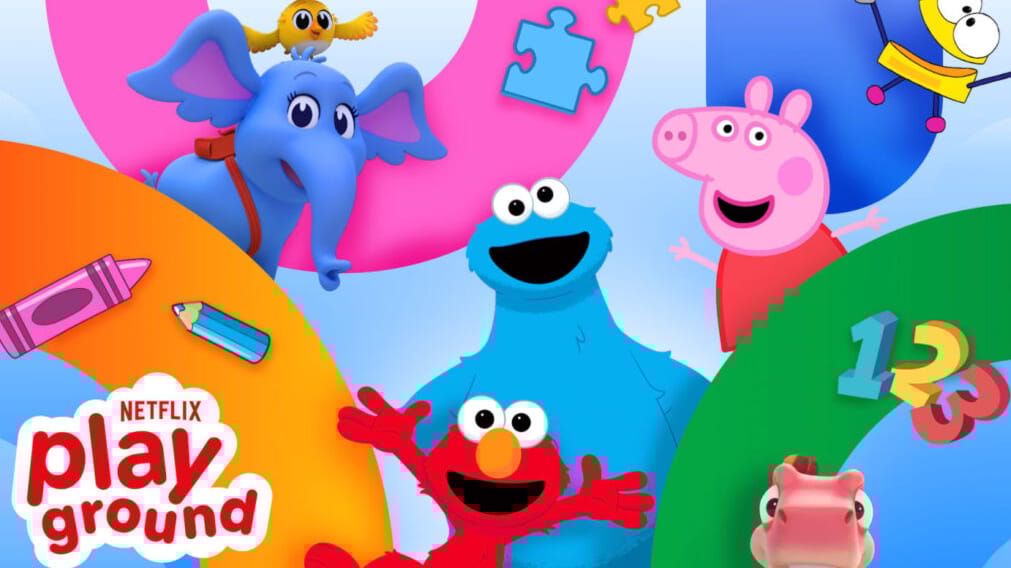
Image source: Netflix
The Rundown: Netflix is turning its kids’ tab into a training ground for the next generation of streamers with the launch of Netflix Playground, an ad‑free mobile gaming app for kids aged eight and under.
The details:
The standalone gaming app comes bundled with every Netflix subscription at no extra cost, but requires parental sign-in.
It launches first in the U.S., Canada, the UK, Australia, the Philippines, and New Zealand on iOS and Android, with global rollout scheduled for April 28.
Every title in Playground is playable offline, with parental controls in place and no ads, in‑app purchases, or additional fees of any kind.
At launch, the catalog centers on games based on familiar brands like Peppa Pig, Sesame Street, StoryBots, Dr. Seuss, and coloring or puzzle apps.
Why it matters: Playground is Netflix’s first real hit at Apple Arcade and Amazon Kids+, folding an ad‑free kids’ game bundle into a subscription that rivals still upcharge for. If it hooks young kids on playing inside the same franchises they watch, Netflix tightens its grip on family time.
EVEN REALITIES

Image source: Even Realities
The Rundown: Chinese upstart Even Realities is taking aim at Meta’s Ray‑Ban smart glasses by selling camera‑free specs that promise all the AI assistance with none of the “creepy lens on your face” surveillance vibes, the Financial Times reports.
The details:
Even’s $600 G2 glasses skip the front‑facing camera entirely, using a mic and a floating 3D heads-up display for email, maps, and real-time translation.
The company positions the glasses as a direct foil to Meta’s Ray-Bans, arguing most people don’t want “a camera on face” in everyday use, even if creators do.
It also launched Even Hub, an app store that turns the G2 into an open platform, with 50+ third‑party apps and an SDK used by 2K developers.
Meta is meanwhile working to scale its AI glasses production toward 20M pairs a year by 2026 while packing them with camera‑driven Meta AI features.
Why it matters: Smart glasses are having a genuine breakout moment — Meta’s Ray-Ban, Chinese rival Rokid, and a wave of Android XR devices are all competing to build the next iPhone, but one you’d wear. Even is making a different bet: that most people want a quiet AI assistant on their face, not a surveillance device.
QUICK HITS
NASA’s Artemis II crew flew the Orion to 252,700 miles from Earth, setting a new record for the farthest distance humans have ever traveled from the planet.
Elon Musk is reportedly requiring banks and other advisers working on SpaceX’s planned IPO to purchase subscriptions to his Grok AI chatbot service.
Oracle reportedly laid off 30K employees by email as part of a cost-cutting push despite reporting a 95% surge in profit and heavy investment in an AI data center.
Maine is poised to become the first U.S. state to temporarily ban the construction of large new data centers to study their environmental and power-grid impacts.
Amazon and the US Postal Service reached a deal that will cut Amazon’s USPS package deliveries by 20%.
High gas prices in the U.S. are making EVs more attractive again, potentially helping Tesla reverse its recent sales slump, Axios reported.
Apple is again asking the U.S. Supreme Court to review its App Store fight with Epic Games over commission limits.
Scientists built a tiny implant that keeps drug‑producing cells alive for weeks to deliver controlled treatments inside the body.
Satellite startup Impulse Space is partnering with Anduril to develop experimental space-based interceptor tech for Trump’s planned Golden Dome missile defense shield.
COMMUNITY
Read our last AI newsletter: Sam Altman's new 'social contract' for AI
Read our last Tech newsletter: Google’s Texas-sized data center problem
Read our last Robotics newsletter: UBTech offers $18M / year for AI scientist
Today’s AI tool guide: Stress test any business idea with Perplexity
Watch our last live workshop: The State of AI Presentation Tools in 2026
That's it for today's tech rundown!We'd love to hear your feedback on today's newsletter so we can continue to improve The Rundown experience for you. |
See you soon,
Rowan, Joey, Zach, Shubham, and Jennifer — The Rundown’s editorial team
Reply