- The Rundown Tech
- Posts
- SpaceX rocket is about to crash into the Moon
SpaceX rocket is about to crash into the Moon
PLUS: Meta loses 20M users


Jennifer Mossalgue, Rowan Cheung, Shubham Sharma & Zach Mink
May 01, 2026

Good morning, tech enthusiasts. A dead SpaceX Falcon 9 upper stage — left to drift for two years after delivering two commercial moon landers — is now on an unplanned collision course with the lunar surface.
The 45-foot booster will slam into the Moon at Mach 7 on August 5, in what will be one of the most closely tracked crashes in spaceflight history. No one will get hurt, but the Moon will sport a new crater.
In today’s tech rundown:
SpaceX rocket to slam into the Moon
Meta loses 20M users this quarter
AI glasses that listen all day, rival Meta
Drone strikes hit Big Tech’s Gulf buildout
Quick hits on other tech news
LATEST DEVELOPMENTS
SPACEX

Image source: Bill Gray / Images 2.0
The Rundown: A dead SpaceX Falcon 9 upper stage that launched two commercial moon landers in 2025 is now on track to slam into the lunar surface at roughly Mach 7 — 7x the speed of sound — on August 5.
The details:
A spent SpaceX Falcon 9 upper stage that launched two commercial lunar landers in January 2025 has been left drifting in a chaotic orbit.
After more than a year of tracking by independent orbital analyst Bill Gray, calculations now show the booster is on a collision course with the moon.
The 45 ft. booster is expected to slam into the lunar surface near Einstein crater on August 5, at about Mach 7 — roughly 2.4 km/s.
The impact poses no risk to people or satellites but will blast out a new crater and briefly throw up a plume of dust that NASA spacecraft can later image.
Why it matters: The crash will give scientists a rare, precisely timed impact experiment on the moon, letting orbiters study how high‑velocity strikes excavate material and alter the surface in real time. It also spotlights how commercial lunar missions are forcing space agencies to confront space junk well beyond low Earth orbit.
META

Image source: Getty Images / Reve AI
The Rundown: Meta posted its fastest revenue growth since 2021 in Q1 2026 — and simultaneously shed roughly 20M daily users across Facebook, Instagram, WhatsApp, and Messenger, marking one of the rarest reversals in the company’s history.
The details:
Meta lost roughly 20M daily users across Facebook, Instagram, WhatsApp, and Messenger in Q1 2026, marking a rare drop in its combined audience.
Despite the user decline, Meta delivered its fastest revenue growth since 2021, with Q1 2026 sales jumping about one-third year over year.
The company raised its planned 2026 AI infrastructure spending, guiding total investment as high as $145B to fund data centers and compute.
Execs said they had underestimated AI demand and now need to catch up on servers, chips, and data center buildouts to support new AI products.
Why it matters: Meta attributed the user drop in its family of apps to the Iran war’s internet disruptions and a WhatsApp ban in Russia — not organic churn. The real jolt is the AI bill of up to $145B in 2026, raising the question investors can’t stop asking: how long can Meta keep feeding the machine before the machine feeds back?
MIRA
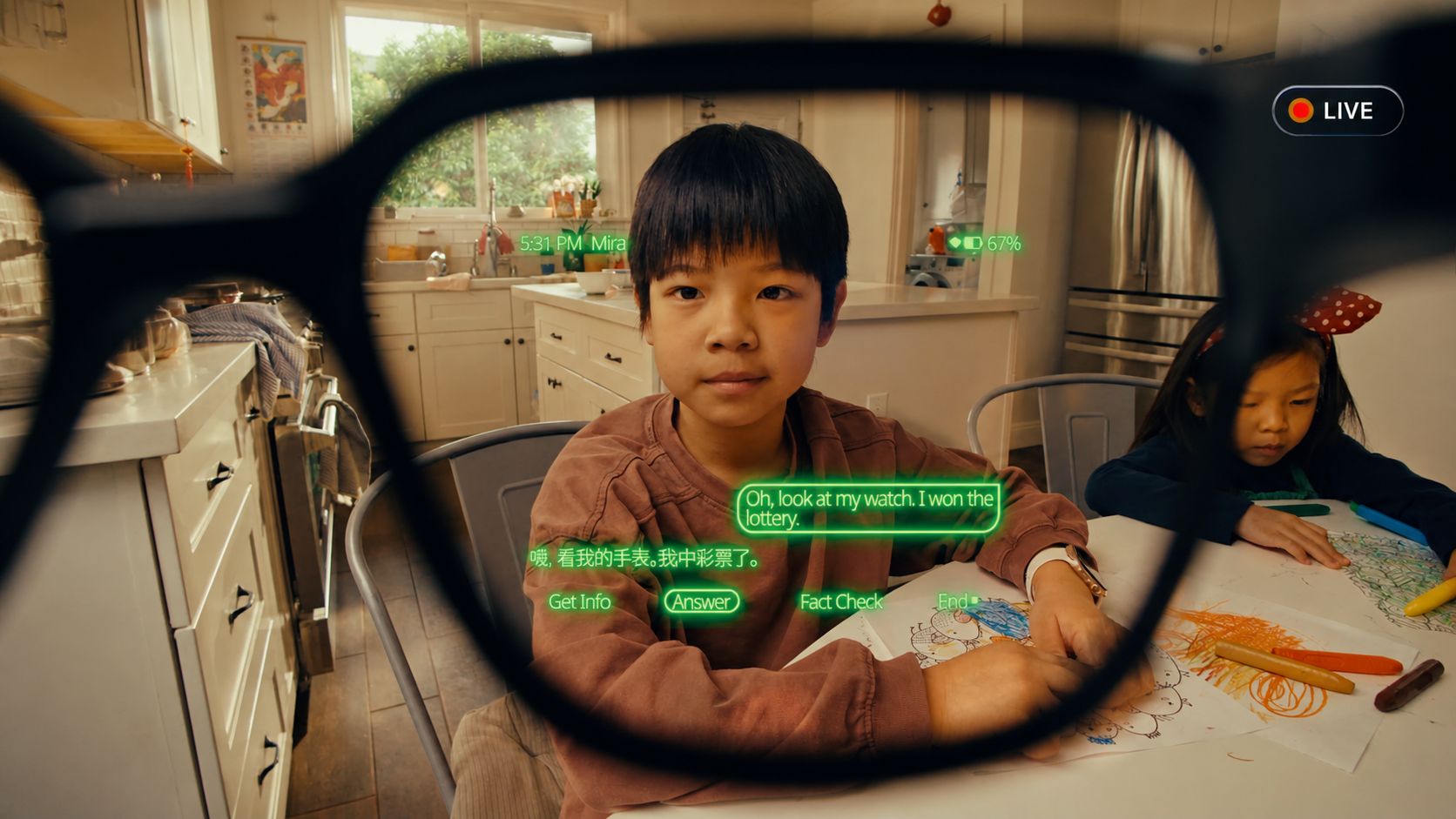
Image source: Mira
The Rundown: Mira, the startup founded by Harvard dropouts AnhPhu Nguyen and Caine Ardayfio, just unveiled its first product — camera-less AI glasses that listen to your entire day and act as a "second brain" to help with day-to-day tasks.
The details:
Priced at $649, Mira glasses listen continuously and become personalized to the wearer’s habits/preferences, surfacing answers at the tap of a paired ring.
They can translate 60+ languages in real time and come with unlimited memory, letting users search through full conversations or summaries.
Users also get an agent (controlled with the ring) that uses the glasses' context for tasks like sending emails, booking rides, or shopping on Amazon.
The glasses connect to apps like Slack, Notion, and Gmail for added context, with answers also appearing in front of users’ eyes via an AR display.
Why it matters: Unlike Meta’s Ray-Bans, Mira is pushing the no-camera approach. All recordings are deleted; only transcripts are saved. The founders are betting this is the version of AI glasses people want to wear. If successful, Mira could define the next generation of personal AI in what’s set to become a very crowded market.
DATA CENTERS

Image source: Ideogram / The Rundown
The Rundown: A strike that damaged Pure DC’s Abu Dhabi data center during the Iran war has pushed the company to freeze new Middle East projects, exposing how fragile Big Tech’s trillion‑dollar AI infrastructure bet is to real‑world conflict, CNBC reports.
The details:
Iranian drone attacks in the Iran war have hit multiple data centers in the Gulf, including AWS facilities in the UAE and Bahrain, and an Oracle site in Dubai.
Pure Data Centre Group (Pure DC), backed by Oaktree, reportedly says shrapnel from a strike damaged its Abu Dhabi data center on Yas Island.
The company’s CEO told CNBC that “no one’s going to run into a burning building” and that investors are now cautious about putting capital in the region.
The Gulf’s data center capacity is set to triple from 1 GW in 2025 to 3.3 GW by 2030, backed by a wave of landmark commitments.
Why it matters: The Gulf became one of the biggest destinations for AI and cloud money, with cheap energy, ample land, and aggressive national AI strategies. But those same facilities are now reportedly being treated as wartime targets, forcing investors to price in missile risk alongside megawatts.
QUICK HITS
Meta reportedly ended its contract with AI vendor Sama after some of its Kenyan workers said they had to review intimate footage, including videos of people having sex.
Orbital compute startup Starcloud is telling investors it is in talks to raise new funding at a roughly $2.2B valuation, The Information reports.
Apple posted a record March quarter with revenue up 17% to about $111B, as surging iPhone sales and strong Mac demand beat Wall Street expectations.
Beijing banned drone sales in the capital, designating the entire city a no-fly zone where all drones must be registered with the police and flights require permits.
Meta’s HR chief reportedly told staff that, on top of next month’s planned 10% job cuts, the company can’t rule out further layoffs.
Genome pioneer J. Craig Venter, who helped drive the first human genome sequence and created the first organism with a synthetic genome, died aged 79.
Spotify launched “Verified by Spotify” badges and tighter rules that block AI‑generated profiles from verification while downranking low‑quality AI music.
Divine, the Jack Dorsey–backed Vine reboot, launched publicly on iOS and Android, offering an archive of roughly 500K restored six‑second Vine videos and tools.
New Mexico is seeking court orders to force Meta to implement child safety measures, prompting Meta to threaten to withdraw its platforms from the state.
Motif Neurotech won FDA clearance to run the first U.S. clinical trial of a tiny wireless brain implant that targets treatment‑resistant depression.
EV maker Rivian reduced its U.S. Department of Energy loan from $6.6B to $4.5B for its Georgia factory.
COMMUNITY
Read our last AI newsletter: The White House rethinks its Anthropic fight
Read our last Tech newsletter: Samsung’s Meta Ray-Ban rival just leaked
Read our last Robotics newsletter: A humanoid baggage handler has landed
Today’s AI tool guide: Stress test business ideas with Perplexity
That's it for today's tech rundown!We'd love to hear your feedback on today's newsletter so we can continue to improve The Rundown experience for you. |
See you soon,
Rowan, Joey, Zach, Shubham, and Jennifer — The Rundown’s editorial team
Reply