- The Rundown Tech
- Posts
- Netflix buys Warner Bros. in $82B deal
Netflix buys Warner Bros. in $82B deal
PLUS: Altman shops a rocket company


Jennifer Mossalgue & Rowan Cheung
December 05, 2025

Good morning, tech enthusiasts. Netflix is going all‑in on Hollywood, reportedly buying Warner Bros. Discovery’s studios and streaming arm in a massive $82.7 B deal.
That means Harry Potter, DC superheroes, and HBO hits could soon live under one Netflix roof alongside its 300M+ subscribers. Regulators are already eyeing the merger — but if it goes through, Netflix could emerge as Hollywood’s biggest power player.
Reminder: Our next workshop is today at 4 PM EST. Join and learn how to leverage Google’s new Nano Banana Pro to create polished slide decks. RSVP here.
In today’s tech rundown:
Netflix strikes $82.7B deal to buy Warner Bros.
Altman eyes his own SpaceX-style rocket company
Amazon preps its postal takeover
Meta to slash Metaverse budget by 30%
Quick hits on other tech news
LATEST DEVELOPMENTS
NETFLIX
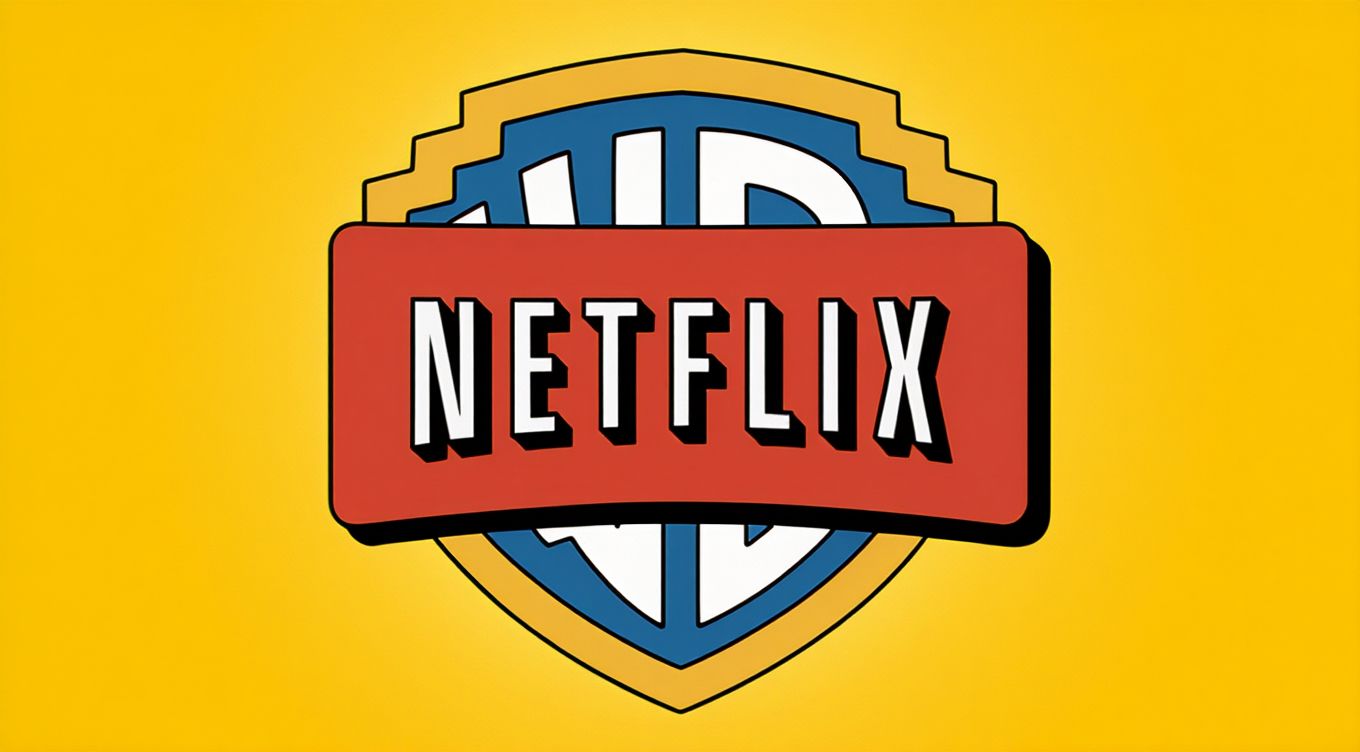
Image source: Ideogram / The Rundown
The Rundown: Netflix announced that it just struck an $82.7B deal to buy Warner Bros. Discovery’s studios and streaming arm, in what could become one of the most consequential Hollywood mergers in decades.
The details:
Netflix would acquire Warner Bros.’ film and TV studios plus HBO and Max, in a transaction valuing the business at about $82.7B.
The combined entity would merge Netflix’s 300M+ subscribers with WB’s century-old legacy and franchises like Harry Potter, DC titles, and HBO series.
The deal faces intense regulatory scrutiny, with the Directors Guild of America and exhibition groups already warning of dire consequences for filmmaking.
Netflix is offering a $5B breakup fee if regulators block the deal, signaling its commitment despite antitrust concerns.
Why it matters: If approved, this marks Netflix’s transformation from streaming disruptor to Hollywood establishment power. But the move could trigger the defining antitrust battle of the streaming era, testing whether regulators will allow one company to dominate both content creation and distribution at this scale.
OPENAI

Image source: Ideogram / The Rundown
The Rundown: Sam Altman doesn’t just want more compute; he wants it in orbit. The OpenAI CEO is reportedly looking to build a rocket company to loft data centers into space, a moonshot that would put him in direct competition with SpaceX.
The details:
The WSJ reports that Altman has explored deals to either acquire or partner with rocket maker Stoke Space as part of a plan to create a SpaceX rival.
Proposals discussed included a multibillion‑dollar series of equity investments that could eventually give OpenAI a controlling stake in Stoke Space.
The discussions kicked off over the summer and heated up through the fall, but have since been put on ice.
Altman’s long-term goal is to enable space-based data centers to meet AI’s surging compute and energy demands, potentially using solar power in orbit.
Why it matters: If this happens, it would open a fresh front with Musk. SpaceX already dominates the launch market, xAI is chasing OpenAI, and Neuralink is working on brain-computer interfaces. While talks have reportedly stalled with no deal announced, the ambition looks to be real, but the infrastructure is still very much on the drawing board.
AMAZON

Image source: Ideogram / The Rundown
The Rundown: Amazon is reportedly weighing a breakup with the USPS, exploring plans to yank the billions of packages it routes through the postal service and rely solely on its own delivery empire as early as next year.
The details:
Amazon is considering ending its long-running delivery contract with the U.S. Postal Service and shifting those volumes into its internal logistics network.
Discussions hinge on what happens after the current deal expires in Oct. 2026, potentially unwinding a partnership that helped transform USPS into an e-commerce workhorse.
Amazon has already built a massive in-house delivery arm, including planes, Rivian vans, and drones, and is evaluating whether it can fully cover USPS’s role.
Under the current agreement, Amazon accounts for roughly 7.5% of USPS’s revenue in 2025.
Why it matters: If Amazon pulls the plug, USPS could lose billions in revenue at a moment when it faces privatization pressure. The loss could degrade mail service nationwide while transforming Amazon from retail giant into a dominant parcel logistics backbone, reshaping how millions of Americans receive packages.
META

Image source: Reve / The Rundown
The Rundown: Meta’s metaverse dream is getting resized. The company is reportedly weighing budget cuts of up to 30% for its Reality Labs metaverse group — the division behind Horizon Worlds and Quest headsets — with layoffs likely as early as January.
The details:
The metaverse — immersive 3D digital spaces where users interact via avatars — was supposed to be the internet’s next evolution.
Reality Labs has racked up tens of billions of dollars in losses over the past few years as consumer and developer interest in virtual worlds has remained tepid.
At the same time, Meta is shifting resources toward AI models and smart glasses, areas that are showing stronger traction with users and partners.
News of the potential metaverse cut sent Meta’s shares higher, signaling that Wall Street prefers Zuckerberg’s shift away from his metaverse mega-bet.
Why it matters: Meta’s pivot marks a rare public retreat for Zuckerberg, who renamed Facebook in 2021 for immersive 3D virtual worlds that never caught on. The shift toward AI and wearables proves users want practical tools that enhance daily life, not escape hatches to virtual worlds.
QUICK HITS
Apple’s longtime UI design chief Alan Dye, the exec behind ‘Liquid Glass,’ is leaving after a decade to become Meta’s chief design officer.
A Cloudflare outage hit major websites including Discord, LinkedIn, and Spotify this morning before being resolved, marking the third significant disruption this year.
Biotech entrepreneur Collin Gage, cofounder and CEO of ARMR Sciences, is launching the first human trial of a fentanyl vaccine to protect people from overdose.
MIT researchers have developed a noninvasive blood glucose sensor that uses near-infrared light to scan skin tissue and accurately measure blood sugar without needles.
Billionaire footballer Cristiano Ronaldo took an undisclosed stake in Perplexity AI and entered a global sponsorship deal with the $20B AI search startup, Bloomberg reports.
Politically biased chatbots proved more effective than campaign ads at persuading voters to switch candidates, raising concerns about AI’s role in future elections.
Phoebe Gates, Bill Gates’s daughter, is raising $30M for her AI-powered shopping startup Phia at a $180M valuation.
The U.S. Energy Department is awarding $800M to jump‑start small modular nuclear reactors, splitting the money between TVA and Holtec.
Brevo, a Paris-based CRM startup, has become a unicorn with a $583M equity round that it plans to use to take on HubSpot and Salesforce in the U.S. and Europe.
The NHTSA has demanded detailed information from Waymo after Austin reported 19 incidents where the company’s robotaxis illegally passed stopped school buses.
Tesla CEO Elon Musk said on X that the latest Full Self-Driving (Supervised) update lets drivers text while the system is engaged, even though it is illegal in most states.
COMMUNITY
Read our last AI newsletter: Anthropic and OpenAI’s IPO showdown
Read our last Tech newsletter: Apple’s AI shakeup to save Siri
Read our last Robotics newsletter: Humanoid breaks record for fastest build
Today’s AI tool guide: One-Shot a Landing Page with Replit Design Mode
RSVP to next workshop @ 4PM EST today: Nano Banana Pro for Slide Decks
That's it for today's tech rundown!We'd love to hear your feedback on today's newsletter so we can continue to improve The Rundown experience for you. |
See you soon,
Rowan, Jennifer, and Joey—The Rundown’s editorial team
Reply