- The Rundown Tech
- Posts
- Amazon's secret phone project
Amazon's secret phone project
PLUS: Uber's $1.25B robotaxi deal with Rivian


Jennifer Mossalgue, Rowan Cheung, Shubham Sharma & Zach Mink
March 20, 2026

Good morning, tech enthusiasts. Amazon is reportedly building a phone again — yes, after the Fire Phone fiasco.
A year-old internal team, a veteran Microsoft exec, and a codename that hints at something transformative: the company that torched millions on a smartphone flop is taking another shot at your pocket. The twist? It may not even be trying to compete with the iPhone.
In today’s tech rundown:
Amazon is making a smartphone again
Uber and Rivian team up to build 50K robotaxis
New startup to mine asteroids by bagging them
CRISPR could make cancer treatment a one-shot deal
Quick hits on other tech news
LATEST DEVELOPMENTS
AMAZON
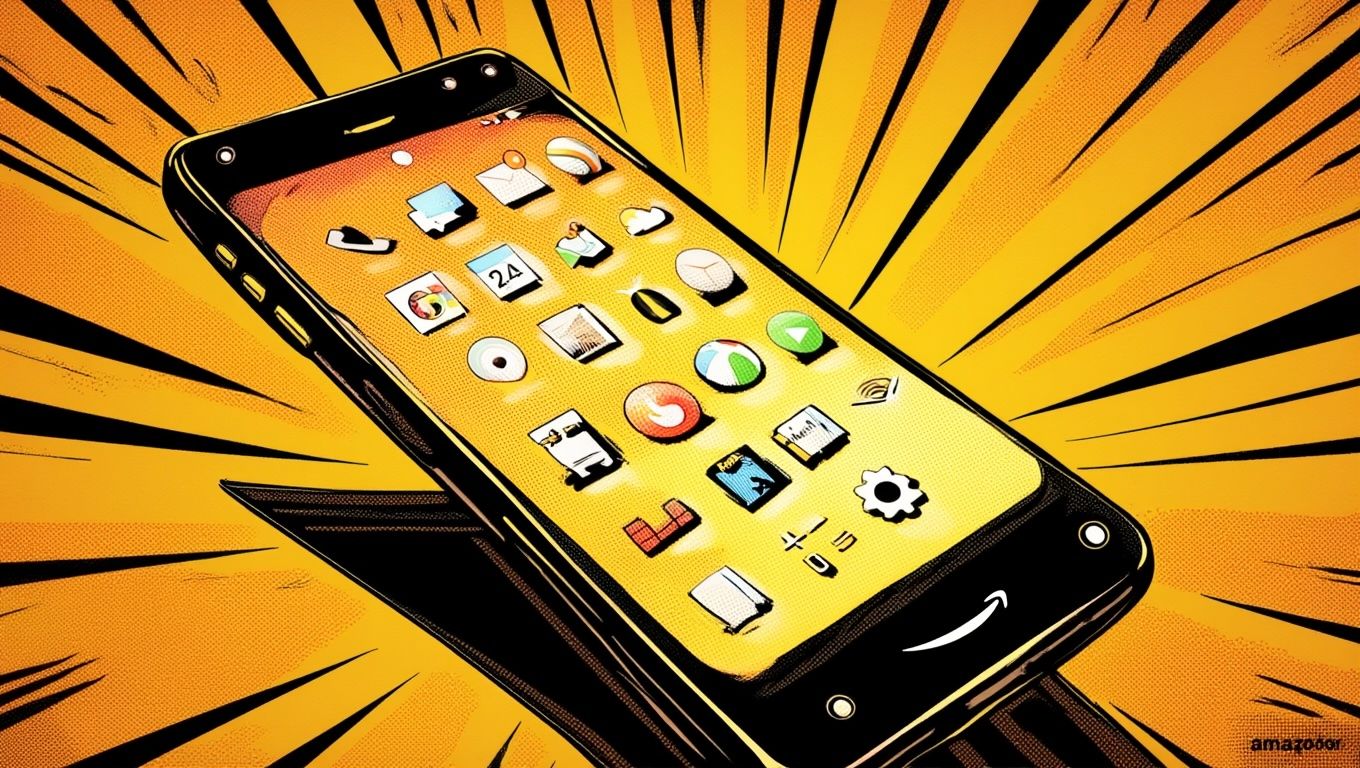
Image source: Reve / The Rundown
The Rundown: Amazon is developing a new smartphone, reviving a category it abandoned after its first attempt, the Fire Phone, flopped more than a decade ago, Reuters reports.
The details:
The device, codenamed “Transformer,” is designed to sync with Alexa and serve as an always-on conduit to Amazon’s services ecosystem.
The project is reportedly led by a year-old internal group called ZeroOne, headed by J Allard, the former Microsoft exec behind the Zune and Xbox.
The Fire Phone launched at $649, got reduced to $159, and was killed after 14 months, leaving Amazon with a $170M charge tied largely to unsold inventory.
Apple and Samsung still own roughly 40% of global sales, and the market is heading for its worst year ever, with shipments expected to drop 13% in 2026.
Why it matters: Amazon is reportedly exploring both a full smartphone and a pared-down dumbphone — with the minimalist Light Phone as reference — suggesting it may be targeting the screen-time backlash as a way into a market Apple and Google have locked up. Either way, it’s a bet that Alexa can finally earn a place in your pocket.
TOGETHER WITH FIN
The Rundown: Join a major product announcement for Fin, the #1 AI Agent for Customer Service, live from Paris. Hear from CPO Paul Adams on how Fin’s latest capabilities help deliver perfect customer experiences.
At the event, you’ll hear:
How AI Agents help make perfect customer experiences possible
Deep-dives into how Fin delivers best-in-class AI customer service.
Real examples of success from companies like Glean.
UBER & RIVIAN

Image source: Rivian
The Rundown: Uber is making a $1.25B bet on California EV maker Rivian’s upcoming R2 as a robotaxi platform — a deal that could put up to 50K autonomous SUVs on its network by 2031.
The details:
Uber is putting up to $1.25B into Rivian in a deal that ties the ride-hailing giant directly to the EV maker’s next-gen R2 platform.
The first 10K vehicles are slated for San Francisco and Miami in 2028, with the service expanding to about 25 cities across the U.S., Canada, and Europe.
The R2s autonomy hardware reportedly includes 11 cameras, five radars, one lidar, and Rivian’s in-house RAP1 chip capable of 1,600 TOPS of AI compute.
Rivian has yet to begin R2 production; the robotaxi variant is slated to be built at the company’s Georgia factory, which is still under construction.
Why it matters: Uber has already partnered with some 25 autonomous vehicle companies, including Waymo and Zoox, but Rivian’s pitch is vertical integration: one company controlling the vehicle, compute, software, and U.S. manufacturing. The stakes are high: the R2 hasn’t rolled off a line, and the deal’s timeline runs to 2031.
TRANSASTRA
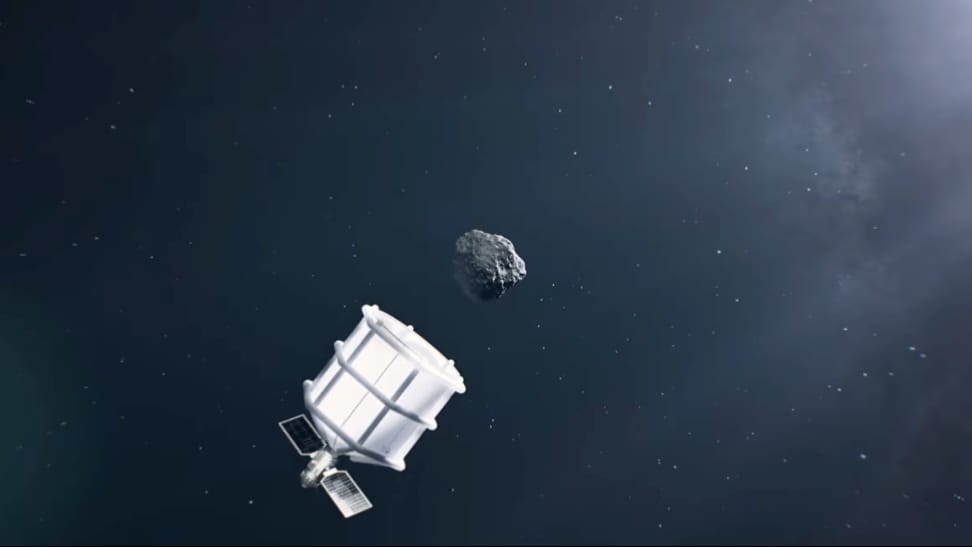
Image source: TransAstra / YouTube
The Rundown: A NASA-backed Los Angeles startup thinks the best way to mine an asteroid is to put it in a giant bag. TransAstra is developing an inflatable bag designed to capture small near-Earth asteroids whole, with no landing or drilling required.
The details:
The idea is to capture a small asteroid, stabilize it, and tow it into a safer orbit where it can be handled more like a resource depot.
TransAstra says “bag it first” could avoid asteroid mining’s challenges, such as syncing with a rock’s motion and working on a spinning, irregular surface.
TransAstra says it has already tested pieces of the system in microgravity on the ISS, enough to claim (very) early and partial proof-of-concept.
An undisclosed customer is funding a feasibility study to capture and relocate a house-sized asteroid weighing around 100 metric tons, according to TransAstra.
Why it matters: Near-Earth asteroids are loaded with water and metals that could presumably fuel and supply deep-space missions — if anyone can actually get to them. TransAstra’s competitors include AstroForge, Karman+, Origin Space, and Asteroid Mining Corporation. The field is small, but the race is on.
BIOTECH

Image source: Ruslanas Baranauskas / SPL
The Rundown: Researchers just used CRISPR to engineer cancer-fighting immune cells directly inside living mice, marking a major step toward replacing today’s slow, expensive CAR-T manufacturing process with a single injection.
The details:
CAR-T therapy works by extracting a patient’s T cells, reprogramming and reinfusing them — a costly, time-consuming process that requires chemotherapy.
Engineering T cells directly in the body would sidestep that process, enabling a single off-the-shelf therapy that could work for many patients.
The research, published in Nature, is still in mice and remains a proof-of-concept, but points toward a more scalable route for CAR-T-style treatments.
The researchers added extra safety layers because editing cells directly in the body raises the risk of hitting the wrong cells.
Why it matters: CAR-T therapy has produced remarkable results in blood cancers, but its complexity keeps it out of reach for many patients. Engineering those same cells inside the body — no lab, no chemo prep, and potentially one injection — could change that calculus. The study is still new, and significant hurdles remain before human trials.
QUICK HITS
The U.S., Germany, and Canada disrupted four major botnets that infected more than 3M devices worldwide and were used for massive DDoS attacks.
Supermicro’s co-founder was charged with helping smuggle up to $2.5B worth of AI servers equipped with Nvidia GPUs to China.
Apple’s head of home hardware, Brian Lynch, is leaving to join Finnish smart ring maker Oura as its senior vice president of hardware engineering.
Meta launched Creator Fast Track, a 3-month program that pays eligible TikTok, YouTube, and Instagram creators to post on Facebook and grow its creator base.
HSBC is reportedly considering cutting up to 20K jobs over the next few years as it uses AI to reshape middle- and back-office operations.
Jeff Bezos’s space firm Blue Origin is now seeking permission to launch nearly 52K AI-capable satellites as part of a push to build data center infrastructure in space.
Meta is opening a flagship retail store, called Meta Lab, on Fifth Avenue in Manhattan, after signing a 10-year lease for a five-story, 15K-square-foot building.
Google is adding a new “advanced flow” for sideloading apps from unverified Android developers, including a 24-hour waiting period as part of its broader verification push.
Amazon is rolling out one-hour and three-hour delivery options in the U.S. for more than 90K items.
Bluesky announced a $100M Series B funding round following the news that CEO Jay Graber stepped down.
COMMUNITY
Read our last AI newsletter: How 81K people really feel about AI
Read our last Tech newsletter: China greenlights commercial brain implant
Read our last Robotics newsletter: Nvidia’s move to own the robot future
Today’s AI tool guide: Use Replit’s Tasks feature to improve your site
RSVP to next workshop on March 26 @ 2PM EST: Intro to Vibe Coding pt. 3
That's it for today's tech rundown!We'd love to hear your feedback on today's newsletter so we can continue to improve The Rundown experience for you. |
See you soon,
Rowan, Joey, Zach, Shubham, and Jennifer — The Rundown’s editorial team
Reply